Liangfang Zhang Named a 2026 MacArthur Fellow: Where High School Students Interested in Bioengineering Can Start

Short answer: Liangfang Zhang, chair of UC San Diego's Aiiso Yufeng Li Family Department of Chemical and Nano Engineering, is a 2026 MacArthur Fellow, recognized for nanotechnologies used in targeted drug delivery and vaccines; the MacArthur Fellowship pays $800,000 over five years with no restrictions. For San Diego families, it signals long-term strength in engineering-meets-medicine at UC San Diego, but a student's access to that kind of research depends on specific high school programs and undergraduate research pathways.
This is EdCommGlobal. We clarify one San Diego school-planning or local-support decision at a time—and turn the next step into a practical plan.
"Our son is in middle school in China. He's strong in math and physics and talks about medicine or engineering. What should we be doing now?"
If your child is still studying in China and leans toward science or engineering, the most useful part of this story for your family is the second half: what a student who wants biomedical engineering actually does after returning to a U.S. high school, which programs are worth paying for, and which aren't. We are a K-12 planning team based in San Diego, and we've organized this in the order families make decisions: the award itself, then return grade and math placement, then how to choose high school programs.
Why Liangfang Zhang won the 2026 MacArthur Fellowship
The MacArthur Foundation announced its 2026 class of 20 Fellows on September 29, 2026. It describes Zhang as a chemical engineer and bioengineer "creating novel nanotechnologies for targeted drug delivery, vaccines, and other biomedical applications."
His best-known work is cell membrane-coated nanoparticles: wrapping nanoparticles in natural cell membranes, such as red blood cell membranes, so the immune system does not reject them, then using them to deliver drugs or act as vaccines. "It's sorta like we disguise the nanoparticles with human cells," he told KPBS. In the University of California's announcement, he said the award "recognizes 16 years of work by my team." He also co-founded Cellics Therapeutics, a San Diego company working to move the technology toward clinical studies.
His lab is the Zhang Research Group (lab website). According to the lab site, it works on biomimetic nanotechnologies for drug delivery, vaccines, and diagnostics, and on treating and preventing infectious diseases, inflammatory and autoimmune disorders, and cancers.
| Item | Public record |
|---|---|
| Award | 2026 MacArthur Fellow (the "genius grant") |
| Funding | $800,000, paid in equal quarterly installments over five years, no strings attached |
| Recognized for | Novel nanotechnologies for targeted drug delivery, vaccines, and other biomedical applications |
| Current roles | Chair, Aiiso Yufeng Li Family Department of Chemical and Nano Engineering, UC San Diego Jacobs School of Engineering; Joan and Irwin Jacobs Chancellor's Endowed Chair in Innovations for Engineering in Medicine |
| Education | BS (2000) and MS (2002), Tsinghua University; PhD (2006), University of Illinois Urbana-Champaign; MIT postdoc (2006–2008); joined UC San Diego in 2008 |
| Lab | Zhang Research Group |
What is the MacArthur Fellowship, and how are Fellows chosen?
The MacArthur Fellowship, widely called the "genius grant," is awarded by the John D. and Catherine T. MacArthur Foundation. According to the foundation's program description:
- Three criteria: exceptional creativity; promise for important future advances based on a track record of significant accomplishments; and potential for the fellowship to enable subsequent creative work.
- No applications: the program does not accept applications or unsolicited nominations. Candidates are put forward by invited nominators, and the names of nominators, evaluators, and selectors are not made public.
- The money: $800,000 per Fellow, paid in equal quarterly installments over five years, with no required products or reports.
- Who is eligible: typically 20 to 30 Fellows are chosen each year from any field. Nominees must be U.S. citizens or residents and cannot hold elective office or senior government positions.
- Not a lifetime award: the foundation says the fellowship "is not a lifetime achievement award—it is an investment in a person's originality, insight, and potential."
How much does it mean? It is not a ranking of a field or of the Fellow's university. Its weight comes from how Fellows are chosen: no applications, anonymous nominators, a small class each year across science, the humanities, and the arts, and unrestricted funding. Unlike the Nobel Prize, which usually honors discoveries made years earlier, the MacArthur Fellowship looks at work in progress and future potential.
2026 MacArthur Fellows list
The full class of 20, as published by the Associated Press on September 29, 2026, in alphabetical order:
| Fellow | Field (summary) | Location |
|---|---|---|
| Holly Jean Buck | Sociologist studying how local communities can help curb climate change and shift to clean energy | Buffalo, NY |
| Felipe De Brigard | Duke philosopher using cognitive science to study memory and forgiveness | Durham, NC |
| Ellora Derenoncourt | Princeton labor economist researching U.S. racial wealth gaps | Princeton, NJ |
| Elizabeth Ellis | Princeton historian of Indigenous nation-building and resistance to European settlement | Princeton, NJ |
| Kaiyu Guan | UIUC environmental scientist using Earth observations, models, and machine learning to improve crop productivity | Urbana, IL |
| Trajal Harrell | Choreographer and dancer | Zurich, Switzerland |
| Marika Holland | Climate scientist forecasting sea ice change and its effects on polar marine ecosystems | Boulder, CO |
| Christine Sun Kim | Artist exploring deaf experience and sound through drawing, murals, and video | Berlin, Germany |
| Song Lin | Stanford organic chemist designing more efficient, sustainable electrochemical synthesis | Stanford, CA |
| Layli Long Soldier | Poet | Santa Fe, NM |
| Rodney McMillian | UCLA artist working across sculpture, painting, video, and performance | Los Angeles, CA |
| Maaza Mengiste | Wesleyan fiction writer | Middletown, CT |
| Ariel Ron | SMU historian of Northern agriculture and 19th-century economic growth | Dallas, TX |
| Kate Spradley | Forensic anthropologist identifying and repatriating remains of migrants who died at the Texas-Mexico border | San Marcos, TX |
| Chip Thomas | Public artist working mostly in the Navajo Nation | Flagstaff, AZ |
| Vincent Valdez | Visual artist depicting historical and contemporary Latino life in the U.S. | Houston and San Antonio, TX |
| Vincenzo Vitelli | University of Chicago physicist predicting how unusual materials behave | Chicago, IL |
| Bryan Washington | Fiction writer | Tokyo, Japan |
| Immanuel Wilkins | Alto saxophonist and composer | New York, NY |
| Liangfang Zhang | UC San Diego chemical engineer and bioengineer | San Diego, CA |
What the award tells families, and what it doesn't
What it does show: UC San Diego's engineering school has invested for years in work where engineering and medicine overlap, and some of that research has turned into local companies. Five UC researchers were named in the same class. If your child is curious about biomedical engineering, San Diego has university labs and life-science companies worth learning about.
What it doesn't show:
- One faculty award doesn't mean undergraduates will take that professor's class or join that lab. UC San Diego's own undergraduate research office says getting involved in research "is not a linear process"; students usually apply to programs or reach out to faculty themselves.
- It isn't a signal about admission difficulty or a program ranking. For UC San Diego's rankings, see our UC San Diego rankings guide, and read those numbers carefully too.
- It doesn't mean every engineering major fits your child. Chemical engineering, nanoengineering, and bioengineering are separate majors at UC San Diego with different course sequences.
Our view: Use a story like this to start a conversation about what engineers actually do. Don't use it as a reason to pick a college. What matters more for a high schooler is a solid math and science foundation and at least one chance to complete a hands-on project.
Return grade and math placement: where STEM plans most often stall
Engineering and biomedical majors build on calculus, chemistry, and physics. U.S. high school math is taken one level at a time, a sequence often called the math pathway, and course names and placement rules differ by district. Whether a student reaches calculus before graduating depends heavily on where they are placed in math when they enroll.
Students returning from schools in China are often on pace or ahead in math while still developing academic English reading and writing. As we explain in our SDUHSD course planning guide, returning students' readiness often differs by subject, so math and English placement should be judged separately rather than by one "overall level." Placement is decided by the district and school, and the school counselor, who handles course planning, has the final word.
The return grade affects how much room there is to adjust. A student who returns earlier has more terms to correct a placement that turns out to be wrong; a student who returns in the middle of high school has less room to catch up if math starts one level too low. There is no single grade that works for every child; we walk through the trade-offs year by year in our grades 6–10 return roadmap and why grade 8 is often called the golden window. For how UC views math readiness for STEM applicants, see our UC STEM math readiness guide.
One thing families can do now: gather your child's math transcripts and a list of textbooks or topics covered, so you can discuss math placement with the school at enrollment.
Common misunderstandings we hear from families in China
These are EdCommGlobal's views; the reasoning follows each one.
"A summer program certificate helps the application." UC San Diego Research Scholars states that its courses are non-credit and that certificates of completion are not issued. UC's Personal Insight Questions (students answer 4 of 8 prompts, up to 350 words each) ask students to describe their own experiences. What helps is what your child actually did and can explain, not a certificate.
"A famous university's summer program matters more than science classes at school." Engineering majors depend on the calculus, chemistry, and physics sequence that shows up on the high school transcript. A summer program makes sense only if it doesn't come at the cost of schoolwork.
"The earlier a child gets into a lab, the better." Established high school research programs usually set grade and prerequisite thresholds: Research Scholars' BE-SHIP typically requires prerequisite courses, Stanford's SIMR is for juniors and seniors who are at least 16, and Boston University's RISE is for juniors. In middle school, building interest and a solid math and science base is the more realistic goal; formal research programs fit better later in high school.
"Money can buy research experience or a publication." Some paid programs promise research projects or guaranteed publication. We advise families not to sign up. Work a student can't explain won't hold up in an application, and if the work isn't really the student's, it becomes an academic-integrity problem: Common App's fraud policy treats presenting another person's thoughts, language, ideas, or experiences as one's own original work as fraud.
UC San Diego summer programs and research options for high school students
Two terms first: a pre-college program is a course or summer program a university offers to high school students, and completing one does not mean admission to that university or college credit; undergraduate research means college students joining a faculty lab to work on research projects.
1. Get the math and science sequence right. See the section above on return grade and placement. When planning high school courses, check whether the math pathway reaches calculus, then fit in chemistry and physics. Choose Honors (a school's more demanding version of a course) and AP (college-level courses with an annual College Board exam) by your child's actual readiness rather than filling the schedule from the start.
2. Start with UC San Diego Research Scholars. UC San Diego's residential Academic Connections summer program was canceled for Summer 2026, and its site points families to Research Scholars instead; as of October 18, 2026, it has not announced whether Academic Connections returns in 2027. Research Scholars is UC San Diego's pre-college program for high school students in grades 9–12, offered in travel, online, hybrid, and in-person commuter formats, with tracks including Bioengineering, Life Sciences, Marine Science, Sports Medicine, and Business Research. The Bioengineering track lists three levels:
- BE-BOAT: an introduction to scientific and engineering principles using lab kits shipped to students, with data analysis and discussion;
- BE-ROW: team projects with active researchers, usually after BE-BOAT;
- BE-SHIP: an independent research project proposed by the student and completed with a university lab.
These are non-credit pre-college courses; whether any credit transfers is up to the receiving institution, and certificates of completion are not issued. The Winter 2027 application deadline is December 18, 2026, with rolling admission and limited space. Summer 2027 schedules and costs will be posted on the program page.
3. How to judge a bioengineering or biomedical engineering program for high school students. These are EdCommGlobal's criteria, and they apply to UC San Diego and any other program:
- Who teaches: active university researchers, or mostly undergraduate instructors?
- What students do: run experiments, analyze data, and write conclusions themselves, or mostly attend lectures and lab tours?
- What they leave with: a project report or presentation your child can explain in their own words.
- Prerequisites and selection: programs with no entry bar at all tend to be closer to a sampler.
- Time, cost, and credit: whether credit is granted, whether your high school accepts it, and whether it clashes with schoolwork.
- Red flags: promises of guaranteed admission, guaranteed recommendation letters, or guaranteed publication.
Bioengineering and biomedical summer programs outside UC San Diego. Two research programs families often compare, as described on their official sites on October 18, 2026 (examples, not endorsements):
- Stanford Institutes of Medicine Summer Research Program (SIMR): an eight-week program in which high school students do medically oriented research with Stanford faculty and researchers. It is open to juniors and seniors (as of fall 2026) who are at least 16, live and attend high school in the U.S., and are U.S. citizens or permanent residents; selection heavily favors Bay Area students. Summer 2027 is tentatively June 7 to July 29, with applications due in late February 2027.
- Boston University Research in Science & Engineering (RISE): for students currently in their junior year, with residential and commuter options; Summer 2027 is listed as June 27 (residential) or June 28 (commuter) to August 6, pending approval. Its Internship track lists research areas including biomedical engineering and medical laboratory research. Applications open December 17.
Both programs set their own eligibility rules and are selective; use the criteria above to compare them with Research Scholars.
4. Ask "why" before you pay. A paid university pre-college program is not an admissions boost by itself. It's worth doing if your child genuinely wants to test the field and will finish the project and explain what they did. If it's only another line on an activities list, time spent on school science courses and clubs is often a better use.
5. For younger kids, start with science close to home. Elementary and middle schoolers don't need research programs. A visit to UC San Diego's Birch Aquarium (see our Birch Aquarium axolotl exhibit family guide) or a few repeat-visit places from our UC San Diego and San Diego education resources guide is a more natural start than a competition.
Questions to ask on college visits
My child wants to study biomedical engineering. What should we ask when visiting colleges?
- How do undergraduates usually get into faculty labs? UC San Diego's Undergraduate Research Hub lists programs, which typically open applications the quarter before the research starts.
- Can first- and second-year students participate, and which courses come first?
- How do the chemical engineering, nanoengineering, and bioengineering curricula differ, and how hard is it to switch majors?
- How much access do undergraduates have to newer areas, such as the AI research and entrepreneurship work at UC San Diego?
Answers vary widely by school and year; rely on each school's current official information.
How EdCommGlobal can help
EdCommGlobal is a K-12 education planning and local support team based in San Diego (see About us). For students heading toward science or engineering, we work with families on:
- Before deciding: looking at your child's current math level, English, and interests, comparing which return grade is more workable, and what math placement may look like after enrollment (the school makes the final placement).
- Preparing to enroll: organizing transcripts and course materials from China, and helping you discuss placement and course selection with the school counselor.
- After enrollment: within the agreed scope of service, following academic progress and helping decide whether a given summer or research program is worth it (see course and college planning).
We do not promise admission results; colleges make those decisions. We also won't recommend programs whose only purpose is another line on an activities list. What a service includes and who is responsible are agreed before we start.
To talk through your child's situation, contact EdCommGlobal with your child's current grade, where they are in math (a textbook or course name is enough), their English level, and the field they're curious about.
FAQ
What grade should a STEM-minded child return to the U.S. for school?
No single grade works for every child. For a science or engineering path, the key is getting math placed at the right level, keeping up with English reading and writing, and leaving terms to adjust; the earlier a student returns, the more room there is to fix a placement. See our grades 6–10 return roadmap for year-by-year considerations. Math and English placement follow the district's and school's rules.
What is a MacArthur Fellowship?
The MacArthur Fellowship, often called the "genius grant," is awarded by the MacArthur Foundation to typically 20 to 30 people each year. Each Fellow receives $800,000 in equal quarterly installments over five years, with no required products or reports. The foundation describes it as an investment in a person's originality, insight, and potential, not a lifetime achievement award.
How much is the MacArthur genius grant?
$800,000 per Fellow, paid in equal quarterly installments over five years. Fellows can use it however they choose and are not required to submit reports or products, according to the MacArthur Foundation.
How are MacArthur Fellows chosen, and can you apply?
You cannot apply. The foundation does not accept applications or unsolicited nominations; invited nominators, whose names stay private, put candidates forward. Selection is based on exceptional creativity, a track record of significant accomplishments with promise of future advances, and potential for the fellowship to enable further creative work. Nominees must be U.S. citizens or residents.
Who are the 2026 MacArthur Fellows?
The 2026 class of 20 was announced September 29, 2026. It includes scientists such as UC San Diego chemical engineer and bioengineer Liangfang Zhang, Stanford organic chemist Song Lin, and University of Chicago physicist Vincenzo Vitelli, along with historians, economists, poets, novelists, and artists. The full list is in the table above.
Who is Liangfang Zhang, and what does his lab do?
Liangfang Zhang is chair of UC San Diego's Aiiso Yufeng Li Family Department of Chemical and Nano Engineering and a 2026 MacArthur Fellow. He studied chemical engineering at Tsinghua University, earned his PhD at the University of Illinois Urbana-Champaign, and joined UC San Diego in 2008. His lab, the Zhang Research Group, develops cell membrane-coated nanoparticles and other biomimetic nanotechnologies for drug delivery, vaccines, diagnostics, and treatments for infections, cancers, and immune disorders.
Can high school students do research in a UC San Diego lab?
Through formal programs, yes. UC San Diego Research Scholars serves grades 9–12, and its Bioengineering BE-SHIP course has students complete a project with a university research lab, usually after prerequisite courses. Cold-emailing professors for a lab spot rarely works for high schoolers and shouldn't be the default plan.
What UC San Diego summer programs for high school students are available for 2027?
For 2027, the UC San Diego program to watch is Research Scholars, which serves grades 9–12 in travel, online, hybrid, and in-person commuter formats. Its Bioengineering track runs three levels (BE-BOAT, BE-ROW, BE-SHIP), and the Winter 2027 application deadline is December 18, 2026; Summer 2027 sessions had not been posted as of October 18, 2026. Academic Connections, UC San Diego's residential summer program, was canceled for Summer 2026 and has not announced 2027 plans.
Is UC San Diego Research Scholars worth it?
It can be, for a student who wants hands-on work and will carry a project through. The Bioengineering track builds from a kit-based introduction to team research with active researchers and then an independent project with a university lab, which is more substantial than a lecture-only camp. It is non-credit, issues no certificate, and does not boost admissions by itself. In our view it is worth paying for when your child is genuinely curious about the field, and not when the goal is only another line on an activities list.
What bioengineering summer programs are there for high school students?
At UC San Diego, Research Scholars' Bioengineering track offers three tiers that end in an independent lab project. Outside San Diego, families often compare Stanford's SIMR (medically oriented research for juniors and seniors, selection favors Bay Area students) and Boston University's RISE (for juniors, with biomedical engineering among its Internship research areas). Eligibility, dates, and costs differ, so check each official site.
How do I choose a biomedical engineering program for a high school student?
Check who teaches it, whether your child will run experiments and analyze data themselves, whether they finish with a project they can explain, and whether there are prerequisites or selection. Then weigh cost, time, and credit. Be wary of programs that promise admission, recommendation letters, or publications. These are EdCommGlobal's criteria; confirm program details on each official site.
Do university research programs help with college admissions?
No program guarantees admission. UC's Personal Insight Questions ask students to describe their own experiences, so a program's value lies in whether your child was genuinely engaged, what they learned, and whether they can explain it. If your child isn't interested in the field, that time and money usually do more good in their school courses.
Sources: All pages accessed October 18, 2026. UC San Diego Today award story (Sept. 29, 2026); MacArthur Foundation profiles of Liangfang Zhang, Kaiyu Guan, and Song Lin, and fellowship program description; Associated Press full 2026 class list (Sept. 29, 2026); University of California news: five UC Fellows (Oct. 1, 2026); KPBS interview (Oct. 1, 2026); Zhang Research Group; Stanford SIMR; Boston University RISE; UC San Diego Research Scholars; UC San Diego Academic Connections; UC San Diego Undergraduate Research Hub. Program schedules, deadlines, and costs change each year; confirm on official sites before applying.
Facts come from the public sources above; "Our view" and the recommendations reflect EdCommGlobal's editorial judgment.
Related reading
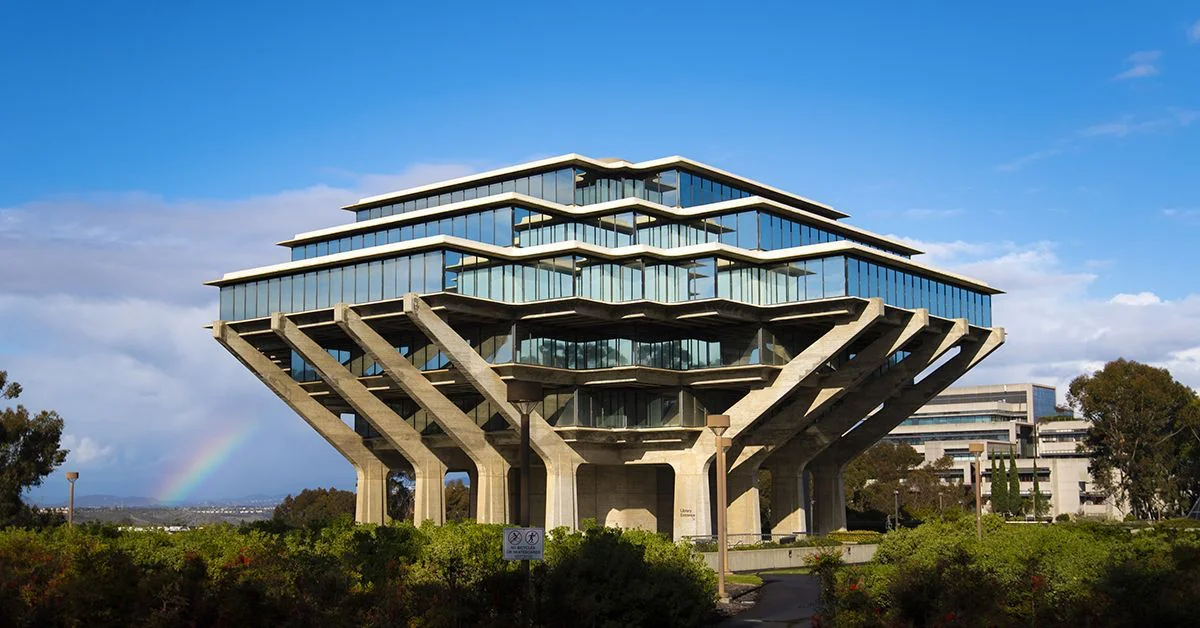
UC San Diego Is the No. 6 U.S. Public University: What the 2027 U.S. News Ranking Means for Families
UC San Diego ranks No. 6 among U.S. public universities for the fourth consecutive year, while undergraduate AI rises to No. 8 and economics to No. 12. Here is what those results do—and do not—mean for San Diego families.

UC San Diego Ranks No. 4 Among U.S. Public Universities: What It Means for San Diego Families
UC San Diego ranks No. 20 worldwide and No. 4 among U.S. public universities in the 2026 Academic Ranking of World Universities. For Chinese families exploring San Diego public and private schools, the bigger story is how a leading research university raises the educational ceiling of an entire city.

College AI Policy in 2026: AI Literacy Requirements, AI on College Essays, and What San Diego High School Families Should Know
College AI policy is changing: SUNY now requires AI literacy for fall 2026 entrants. Can students use AI on college essays, does Common App check for AI, and what are San Diego high school AI rules? A guide for families.