San Diego School Visit: 20 Questions About Academics and Fit

Short answer: On a San Diego school visit, ask about course placement, actual workload, academic and wellbeing support, student routines, college counseling, commuting, and family responsibilities. Record the school's policy answer separately from what your child observes. A visit can narrow a list, but it cannot confirm admission, public-school eligibility, or final course placement.
San Diego schools do not offer one standard kind of visit. As of September 2026, Bishop's schedules small-group tours by division, Francis Parker offers both individual-family and student-ambassador group tours, LJCDS asks families to submit an inquiry before touring, and Cathedral Catholic and Pacific Ridge manage visits through their own admissions processes. Before traveling, confirm whether the event is a campus tour, open house, shadow day, or public-school information night.
Who this is and is not for
| This checklist is useful for | It does not replace |
|---|---|
| Families comparing San Diego public or private middle and high schools | The admissions office's formal answer about eligibility, materials, and deadlines |
| A student still in China whose family must concentrate visits into one short trip | District confirmation of a public-school address, boundary, or enrollment eligibility |
| Parents evaluating whether academics, support, and commuting are sustainable | The school's final transcript, credit, English, or math placement decision |
| Families that have read rankings and outcome data but need firsthand evidence | Any promise about admission, transfer, financial aid, or course availability |
If the family does not have a shortlist yet, begin with the San Diego school directory. If CCA or Torrey Pines is already the goal, first understand the address, boundary, and High School Selection risks, then prepare visit questions.
Know which type of San Diego school visit you booked
Different events answer different questions. The word “visit” on a registration page does not necessarily mean a family can observe classes, interview, or meet privately with the admission director.
| Visit format | What families may usually see | What to confirm before booking |
|---|---|---|
| Campus tour | Campus spaces, selected learning areas, and an introduction from a student or admissions representative | Whether tours are divided by grade, whether the student may attend, and whether individual questions are possible |
| Open house / information session | Group presentations about academics, activities, admission, tuition, or aid | Whether classrooms are open, registration is required, and which application year the event serves |
| Shadow / student visit | Part of a real student schedule with a current student | Grade restrictions, whether it is part of the application, and how far ahead to reserve |
| Public-school information / welcome night | Programs, courses, and incoming-student registration information | Eligibility restrictions and how the event differs from boundary enrollment or school selection |
Bishop's says its tours are adjusted by applicant division. Parker lists both individual-family and student-ambassador group tours. Cathedral Catholic separates campus tours, enrollment presentations, and its Grade 8 shadow program. Pacific Ridge likewise distinguishes school-day tours, open house, and high-school visit days. Knowing the format makes the questions below much more useful.
Official sources: The Bishop's School Visit Us, Francis Parker Visit, Cathedral Catholic Location & Campus, and Pacific Ridge Tours; rechecked September 3, 2026.
What 20 questions should parents ask on a San Diego school visit?
Do not try to force all 20 questions into one hour. Choose eight to ten based on the student's three largest uncertainties, then use the website or a follow-up email for the rest. The student should also select three to five questions they are willing to ask.
Curriculum, placement, and workload
- What does a typical week and school day look like in the target grade? Ask whether courses are yearlong, semester-based, or taught in a compressed block schedule, and how passing periods, lunch, and activities fit into the day.
- What prerequisites do new or transfer students need for Honors, AP, Advanced Studies, or advanced math? “How many APs do you offer?” is less useful than asking how this student can enter a course and when the decision is made.
- How does the school use transcripts, placement tests, teacher recommendations, and writing samples to set course levels? A Chinese course name or grade may not map directly to a U.S. placement.
- What reading, writing, lab, and project workload is typical in this grade during an ordinary week? Ask for a description of one week instead of relying on one average homework-hour figure.
- If a course is too difficult or too easy after school begins, who reviews placement and when does the adjustment window close? Add/drop rules and prerequisite recovery should be verified for the current year.
Academic, language, and wellbeing support
- How does the school notice and respond when a student repeatedly misses work, loses grades, or stops participating? This reveals how teachers, advisors, counselors, and families share information.
- What support can a fluent English speaker use if academic writing is still weak? Ask whether support comes through a course, writing center, office hours, or an outside referral.
- How does a student request learning support, mental-health counseling, or a counselor meeting, and what happens in an urgent situation? The practical access route matters more than the name of a department.
- How are new, transfer, or midyear students oriented and connected during their first weeks? Ask about buddy programs, advisor check-ins, and new-family sessions.
Student routines, activities, and belonging
- Can someone describe an ordinary student's day from arrival to dismissal? A student ambassador or teacher's concrete schedule is more informative than a broad claim about being “well-rounded.”
- How much unstructured time do students have, and where do they normally study, eat, and take breaks? Observe whether the library and common spaces are actually used by students.
- Which clubs, sports, arts, or service programs are easiest for a new student to enter, and which require auditions, tryouts, or prior experience? A long activity list does not mean every option is immediately accessible.
- How does the school communicate and enforce rules on attendance, lateness, academic integrity, phones, and peer conflict? Families need a clear process, not only a label such as “strict” or “relaxed.”
College planning and course decisions
- When does college planning begin, and when does a student receive an assigned counselor or individual meeting? Follow up by asking who handles course selection, college lists, essays, and parent communication.
- Which graduating class and student population does the school's outcome data cover, and does it show admission or final matriculation? A multiyear college list, UC source-school data, and one class's matriculation are different evidence.
- How does the school help students balance course rigor, GPA, sleep, and activities? A useful answer should explain a decision process rather than prescribe one AP count for every student.
Before discussing college counseling, read the San Diego Class of 2026 five-school outcomes comparison. It explains why public and private schools disclose different evidence and helps families identify vague claims during a visit.
Commuting, cost, and family responsibilities
- What does the morning and afternoon commute look like from our planned neighborhood, including pickup, buses, and late activity dismissal? If possible, drive the route during an actual school commute window.
- Beyond private-school tuition or tuition-free public enrollment, what expenses should a family budget? Ask about meals, transportation, devices, athletics, travel, testing, uniforms, and after-school care, while treating the current official fee list as controlling.
- What requirements apply to a parent, guardian, residence, homestay, or international-student support arrangement? Do not assume every day school accepts relatives or a privately arranged host family.
- If we continue, what is the next formal action, who owns it, and what is the deadline? Record inquiry, application, financial aid, enrollment, and public-school boundary verification as separate steps.
LJCDS's international applicant page shows why Question 19 matters: the school publishes specific conditions involving status, grade level, parental residence, and its partner organization. These rules can change, so the school or its designated partner must confirm them in writing for the relevant application year.
Official source: LJCDS International Applicants; rechecked September 3, 2026. This article does not provide immigration, guardianship, or legal advice.
Which answers can a family rely on, and what needs separate confirmation?
After the visit, divide notes into three columns so one day's impressions do not replace formal verification.
| Topic | Formal school information to record | Visit-day observation only | Must be confirmed separately |
|---|---|---|---|
| Admission or enrollment | Official process, materials, contact, and published deadline | Whether the representative understood the student's situation | Admission result, public-school residency eligibility, waitlist, or capacity |
| Courses and placement | Course catalog, prerequisites, and placement process | Classroom pace, participation, and work on display | Final course, transfer credit, and add/drop result for the student |
| Student support | Formal access to advisors, counselors, writing, or learning support | Whether students use the people and spaces described | Individual eligibility, frequency, cost, and waiting time |
| College outcomes | Official data with a defined year, sample, and measure | One student's panel story | The applicant's probability of admission or a predicted college result |
| Daily life and commute | Calendar, transportation, meal, and activity rules | Campus atmosphere and one test drive | Whether housing, pickup, and the annual family budget are sustainable |
How should public- and private-school visits differ?
| Decision point | Public school | Private school |
|---|---|---|
| Confirm first | Address, district boundary, grade, and current enrollment or choice process | Entry grade, deadline, interview or testing, residence, and status requirements |
| Visit focus | Course structure, placement, incoming-student registration, school support, and transportation | Curriculum and culture, admissions, tuition and aid, family participation, and student experience |
| What a visit cannot prove | A visit alone does not create eligibility for the target school or a CCA/SDA seat | A tour, open house, or shadow visit does not mean admission |
| Controlling follow-up | District locator plus written confirmation from the school enrollment office | Applicant portal, admissions office, and current tuition and policy documents |
SDUHSD's enrollment page says students in Grades 7–12 enroll according to current residence and the designated attendance area; annual High School Selection is a separate process. Its boundary page also warns that the online locator is introductory and that eligibility must be confirmed directly with the school. Visiting CCA or Torrey Pines and qualifying to attend are separate matters.
Official sources: SDUHSD Enrollment, SDUHSD High School Selection, and SDUHSD Boundaries Map; rechecked September 3, 2026.
How should different families use the checklist?
The student is still in China and has only one concentrated visit trip
Ask every school to confirm the event format and target application year before booking. Limit the schedule to one or two schools per day. Prioritize placement, academic-English support, family residence requirements, and the next required documents. The winter San Diego private-school visit guide can help organize the trip.
A Grade 8 family is comparing private high schools
Have the student attend an allowed tour, shadow visit, or student panel. The parent can own cost, application, and support questions; the student can own classroom, activity, and daily-life questions. Afterward, let both people rate the visit independently before discussing it so the parent's brand impression does not overtake the student's experience.
The family plans to enter an SDUHSD public high school
Verify the boundary school before asking about courses, placement, and new-student registration. CCA and Torrey Pines differ in schedule as well as outcome evidence. Use the CCA vs Torrey Pines fit comparison and SDUHSD course-planning guide to prepare.
A parent cannot remain in San Diego full time
Move Questions 17–20 to the top. Confirm that the school accepts the family's proposed residence and care arrangement before deciding whether the campus feels attractive. The public-versus-private framework for a part-time parent covers this decision in more depth.
How should a family compare schools after the visit?
Do not rush to create one overall ranking that day. Ask the parent and student to record one piece of evidence and one unresolved question in each of these five dimensions:
| Dimension | What to record | What to avoid |
|---|---|---|
| Course access | Courses the student can currently enter and missing prerequisites | Counting the full catalog without checking new-student access |
| Usable support | Who helps with writing, grades, or wellbeing and how to book help | Remembering only a department name, not the process |
| Sustainable routine | Whether schedule, work, commute, activities, and sleep can coexist | Treating a special event day's atmosphere as ordinary life |
| Student engagement | Questions the student asked and classes or people that drew a response | Recording only what the parent liked |
| Unresolved risk | Missing confirmation about address, status, placement, cost, or deadline | Treating a verbal answer as a final decision |
If “Which school ranks higher?” remains the family's only conclusion, read how to interpret San Diego school-ranking metrics and put commute, course access, support, and the student's response back into the decision.
Source and data verification notes
| Source | How this article uses it | What it does not establish |
|---|---|---|
| The Bishop's School Visit Us | Division-specific tours and an application-linked tour/interview example | Future dates, an interview, or admission result |
| Francis Parker Visit | Individual-family, ambassador, and division-specific visit formats | That every format remains open |
| LJCDS Informational Events and Tours | Inquiry, grade-range booking, and out-of-town contact route | That an inquiry is an application or admission |
| Pacific Ridge Tours | Difference among a school-day tour, open house, and student visit | Event capacity or application eligibility |
| Cathedral Catholic Location & Campus | Appointment tours, presentations, and a Grade 8 shadow example | Access to every department or an individual answer |
| SDUHSD Enrollment and boundaries | Address-based public enrollment and separate boundary/selection checks | Eligibility for a particular address or student |
Editorial and verification method
EdCommGlobal rechecked each school and district page above on September 3, 2026; publication is scheduled for September 20, 2026. Official pages control event timing, registration, eligibility, application, and enrollment rules. The 20 questions, visit-note table, and family scenarios are EdCommGlobal's decision framework, not a school requirement or admissions, legal, immigration, or real-estate advice. Reopen the school's current page before visiting.
FAQ
Must a family ask all 20 questions during one San Diego school visit?
No. Select eight to ten questions tied to the student's largest risks, such as course placement, academic-writing support, commute, and residence requirements. Verify clearly published facts before the meeting and reserve visit time for questions that need explanation, observation, or follow-up.
Should the student attend the school visit?
Yes when the school allows it, because the student will experience classroom pace, peer interaction, and campus routines. Tour, open-house, and shadow policies differ by event and grade, however. Confirm who may attend before booking instead of assuming every campus area or program is open to both parent and student.
Does attending a tour or open house improve admission chances?
No admissions advantage can be promised. A visit helps a family understand the school, ask specific questions, and decide whether to apply. Whether a school records demonstrated interest, treats a visit as part of the process, or schedules interviews separately must be checked in that year's admissions instructions.
Can a public-school tour confirm that the student may enroll?
No. Public-school eligibility commonly involves actual residence, district boundaries, grade level, and current enrollment or choice rules. In SDUHSD, the online locator is only a starting point; the enrollment office still needs to confirm the address and the student's circumstances.
How can an out-of-town family arrange a San Diego school visit?
Complete the school's required inquiry, then contact the admissions office with the application year, student grade, and travel dates. LJCDS explicitly provides an out-of-town contact route. Whether another school can offer an individual tour, virtual event, or alternative depends on its current reply.
What is the most useful thing to observe during a visit?
Notice whether the student begins asking specific questions. A beautiful campus is memorable, but whether the student understands the classroom rhythm, engages with current students, and can imagine an ordinary day reveals more about the fit questions the family still needs to investigate.
Related reading
- How to plan winter private-school visits in San Diego
- San Diego Class of 2026 outcomes and pathways: five schools compared
- CCA vs Torrey Pines: Class of 2026 data and student fit
- SDUHSD course planning: CCA, Torrey Pines, AP, and GPA
- How to interpret San Diego school-ranking metrics
- San Diego school districts and boundaries
If the family already has a target-school list, entry grade, and tentative residence plan, include them when contacting EdCommGlobal. We can help turn official information, visit questions, and the student's academic background into a verifiable school-selection checklist, but we do not replace a school's eligibility decision or promise admission.
Related reading
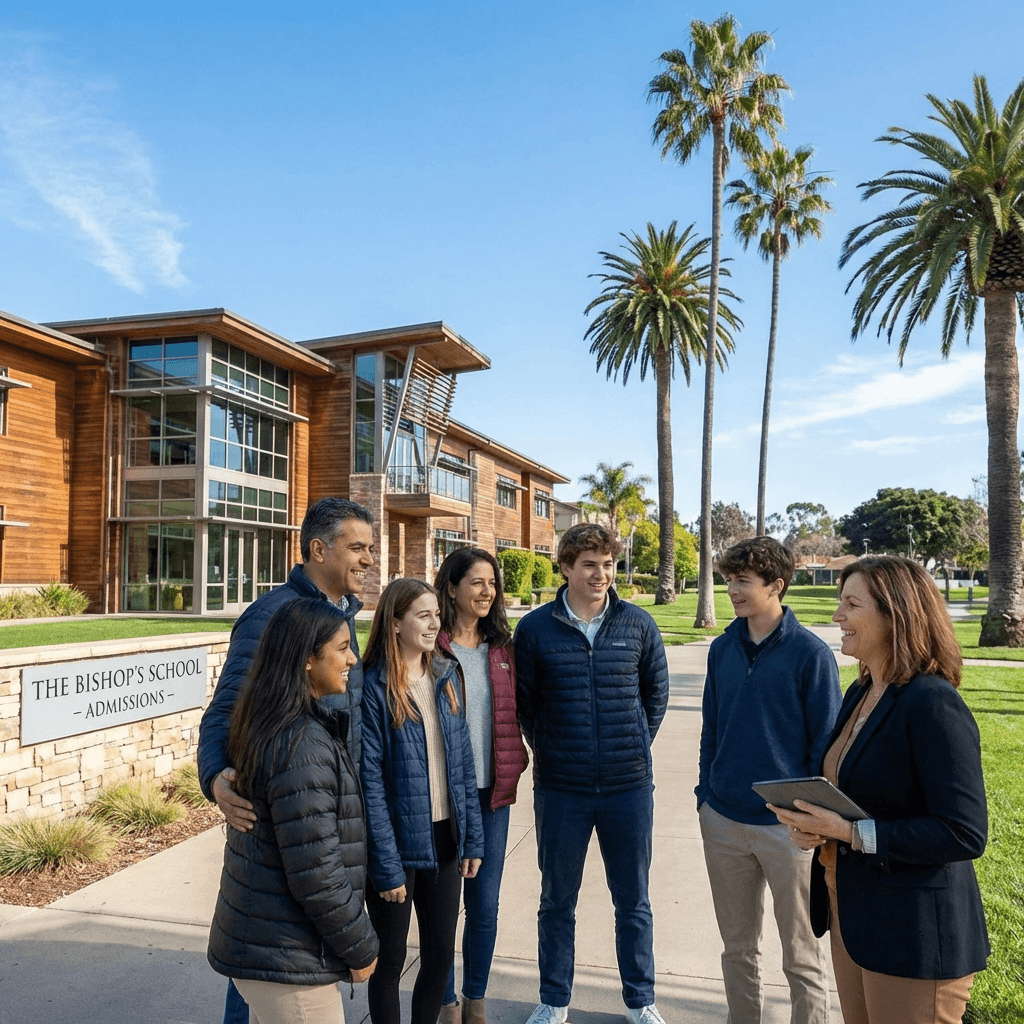
How to Plan Winter School Visits in San Diego: A Private High School Tour Guide
Winter school visits do not guarantee admission. They help families understand curriculum, culture, commute, and fit before applying.
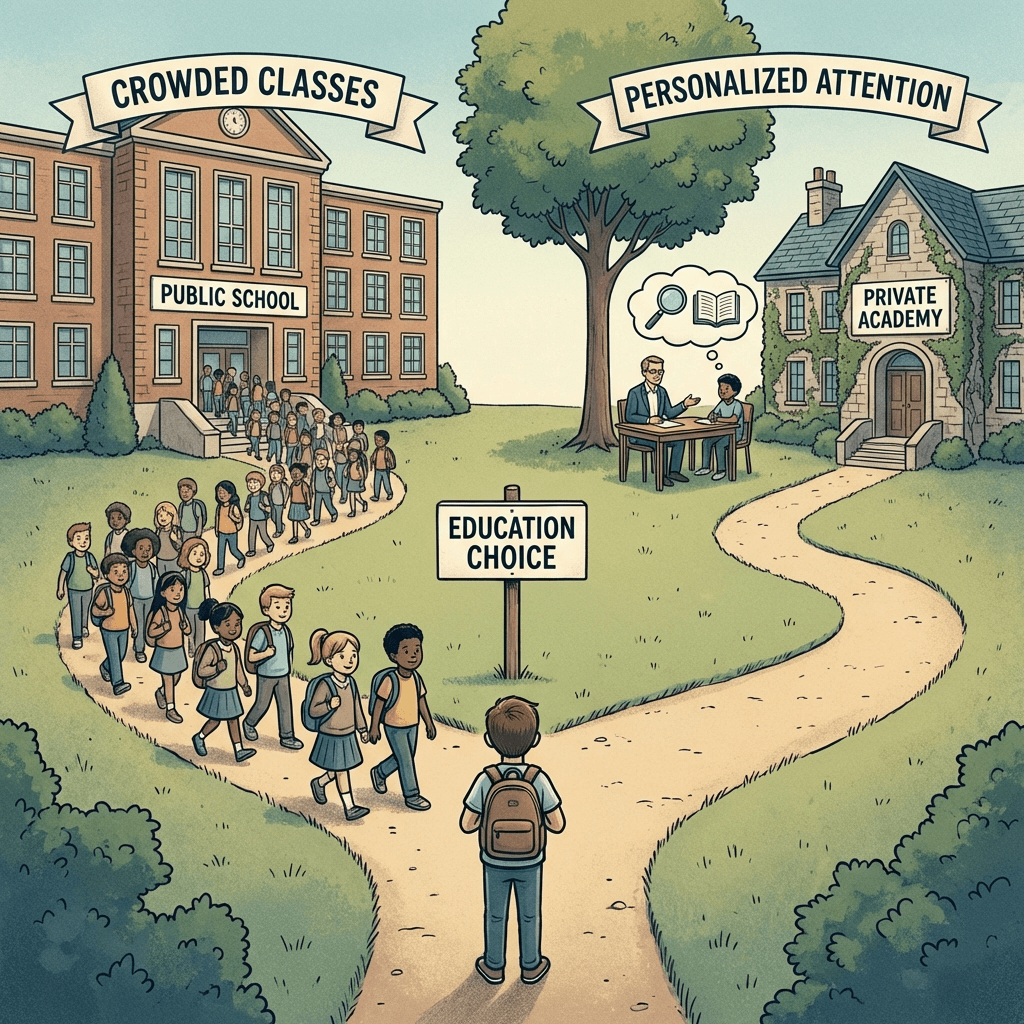
Public or Private? How US-born Children Should Choose When Returning to US Schools
Many US-born children transfer from public to private schools after returning to the US. This article analyzes why 'middle-layer' students benefit more from private schools and the unique advantages of private schools in college planning, curriculum flexibility, and social integration.

CCA Information Night Live: Course Selection and Planning for Top Public Schools
It's the busy school selection season for 8th-grade families. This article takes you inside CCA Information Night, analyzing the 4x4 curriculum, popular course trends, and top academic resources.