San Diego Public vs Private Schools
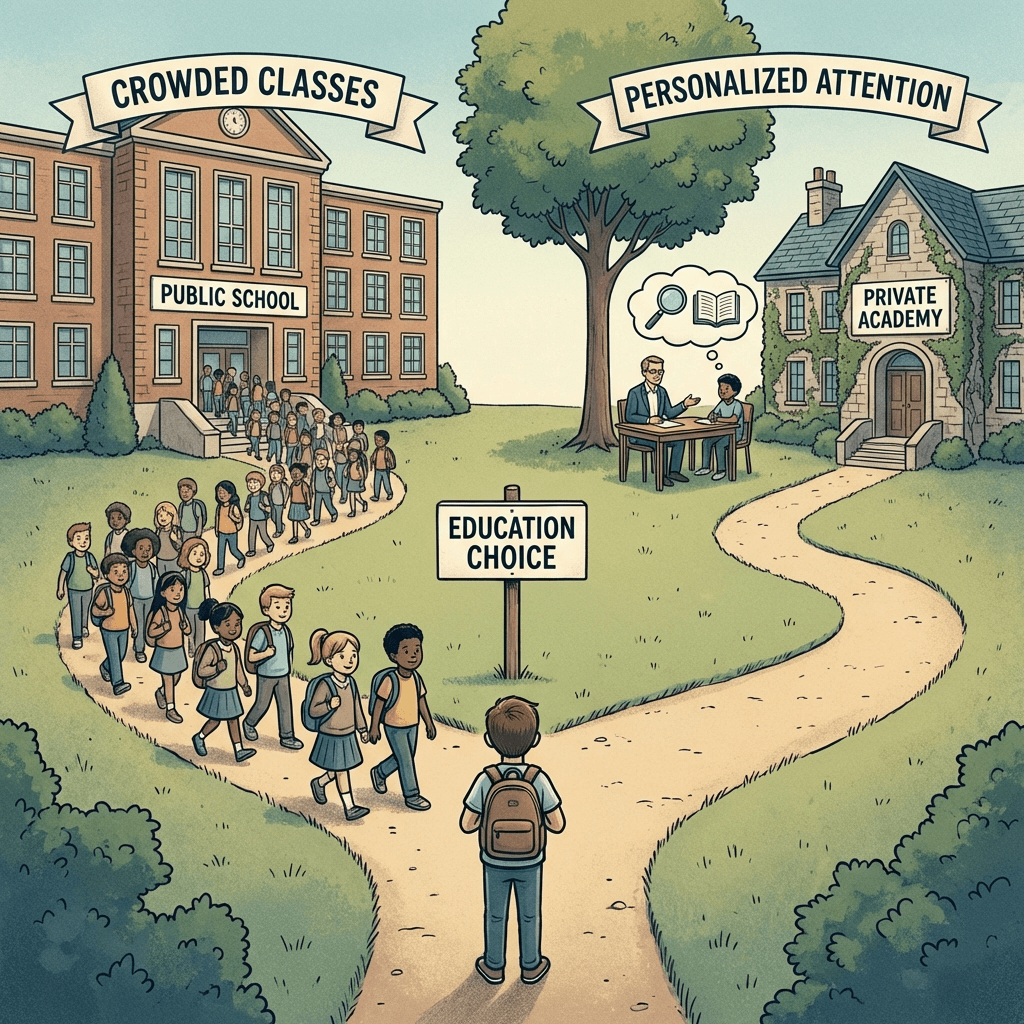
Compare enrollment requirements, housing, learning support, and the full family budget before choosing a San Diego public or private school. Citizenship, local enrollment, private school admission, and daily care each need their own checks. Confirm school requirements before committing to a home or move date.
This guide is for children born in the United States who have since lived and studied mainly in mainland China. Parents may be learning about San Diego for the first time. The same planning questions apply to elementary, middle, and high school; each school must confirm grade placement and documents.
Public vs. private: compare the same questions
A school district manages public schools. An attendance boundary connects residential addresses to schools. A day school expects families to arrange where children live outside school hours; enrolling international students does not mean a school offers boarding.
| Question | Public school | Private school |
|---|---|---|
| Enrollment | Identify the district for the address and grade, then check residency, registration, and transfer procedures | Ask admissions about grade-level openings, documents, assessments, and deadlines |
| Housing | Check the full address, capacity, and any selection or transfer process before renting | Check commuting and care arrangements; admission follows the school's application process |
| Costs | Confirm applicable tuition rules and budget for housing, transport, living costs, and care | Confirm the school year, grade, applicant category, tuition inclusions, and additional costs |
| English and courses | Ask how the school assesses new students and arranges language support and courses | Ask how the school evaluates study in China and what support it provides after admission |
| Parent communication | Identify the roles of teachers, counselors, and the school office | Confirm responsible staff, communication frequency, and support scope |
| Housing and holidays | Arrange after-school, weekend, and holiday care separately from enrollment | Distinguish day school from boarding and check transport and holiday coverage |
Class size, course access, college counseling, and social support vary by school and grade. Being quiet or needing English support does not determine which school type fits. Ask both schools the same questions.
Does a US passport guarantee public school enrollment?
Citizenship is one part of the child's situation. Families still need to confirm actual residence, the responsible district, documents, and placement. A passport does not confirm a seat at a particular school. An F-1 international student checklist should not be assumed to apply to a US citizen.
For example, the Pacific Trails Middle School registration FAQ describes residency evidence, transcripts or the latest report card, and math placement testing for new students. It also explains that attending PTMS does not guarantee admission to CCA. These are school-specific examples.
Before establishing a local address, contact the district to learn the process and when registration can be submitted. Do not rely on an address that has not been established. For public enrollment, use the district guide to identify the district responsible for the address and grade, then request its registration checklist; the PTMS FAQ above is one school-specific example. Obtain private school requirements from the intended admissions office.
For high school documents and timing, see enrollment requirements and application steps for US-born children.
Should we choose a school or rent a home first?
Start with the child's grade, budget, and care plan. Build a shortlist of schools and neighborhoods, then verify individual properties.
- Explore the San Diego community guide and school district guide.
- Check the full address in the official school locator or boundary map. A ZIP code or property listing is insufficient.
- Ask the district about the address, grade, documents, capacity, and any separate selection or transfer process.
- Check commuting, pickup, and after-school care before signing a lease or fixing the move date.
DMUSD's boundary and Option Areas page explains that capacity can lead to placement at another school with space. Elementary families can also use our 92130 enrollment and address guide.
Why budget beyond tuition?
After confirming applicable school tuition rules, calculate the cost of living locally. Private school tuition also differs from the total family expense.
| Category | What to record |
|---|---|
| School | Applicable tuition, application or registration costs, meals, equipment, activities, and after-school programs |
| Housing | Rent, deposit, furniture, utilities, and accommodation before school and during holidays |
| Transport | School travel, activities, pickup services, and backup arrangements |
| Care | Who provides care, what weekends and holidays include, and emergency contacts |
| Other living costs | Health coverage and care arrangements, everyday spending, flights, and contingency funds |
Compare the same 10- or 12-month period and separate one-time from recurring expenses. Francis Parker's tuition page illustrates how a school lists included and additional items. Use current school information or dated quotes for prices. Our high school cost guide provides a budget starting point; elementary and middle school families should replace the school-specific items.
Which school provides the right English support?
Bring schoolwork, reading, and writing samples alongside any test results. Ask each school:
- How are records from China evaluated, and how are grades and courses assigned?
- What English support is available, how does it affect the timetable, and who follows progress?
- What evidence is used for math placement, and how can a placement be reviewed?
- Who should parents contact if their child struggles with assignments or making friends?
Compare the actual support and eligibility conditions. See English writing preparation and the grades 6–10 return roadmap.
Can a private school handle everything while parents stay in China?
Admissions, teaching, and everyday care have different responsibilities. An offer letter does not establish a care arrangement. A day school should not be assumed to provide housing, pickup, or holiday supervision.
Write down who lives with the child, handles transport, receives school communications, and can attend in an emergency. Confirm the school's requirements using our guides to school choice when parents cannot stay full time and care and guardianship arrangements.
Where should a first-time returning family start?
Use this year or next year to clarify timing and family arrangements, then work through enrollment, school type, housing, and the budget.
When contacting EdCommGlobal, share the child's current grade in China, intended move date, English reading and writing needs, whether a parent can stay, and annual budget range. These details help us organize school, neighborhood, and transition questions.
Sources and verification date
The linked PTMS registration FAQ, DMUSD boundary and Option Areas page, and Francis Parker tuition page were verified on October 8, 2026. They support the specific examples above. Individual eligibility, admission, placement, and costs remain subject to the relevant school's current confirmation.
Related reading

San Diego School Visit: 20 Questions About Academics and Fit
Use 20 practical questions to evaluate academics, workload, student support, college counseling, logistics, and fit during a San Diego school visit.

San Diego Private School Open Houses Fall 2026: Dates for 11 Schools and How to Plan Four Weekends
Fall 2026 open house dates for San Diego private schools—Bishop's, Parker, LJCDS, Pacific Ridge, SDJA, OLP, Cathedral Catholic, Santa Fe Christian, Grauer, St. Augustine, and Maranatha—with RSVP notes, schedule conflicts, and six questions to ask before you go.

San Diego School District Rankings 2026: What the California School Dashboard and CAASPP Results Show for Del Mar, San Dieguito, Poway, and San Diego Unified
San Diego school district rankings for 2026, built from the CAASPP and California School Dashboard data released Oct. 15, 2026: proficiency rates, statewide standing, and Dashboard colors for Del Mar Union, San Dieguito, Poway Unified, and San Diego Unified, plus why district averages hide school-level differences.