Is US High School Worth It? A Decision Framework for Families
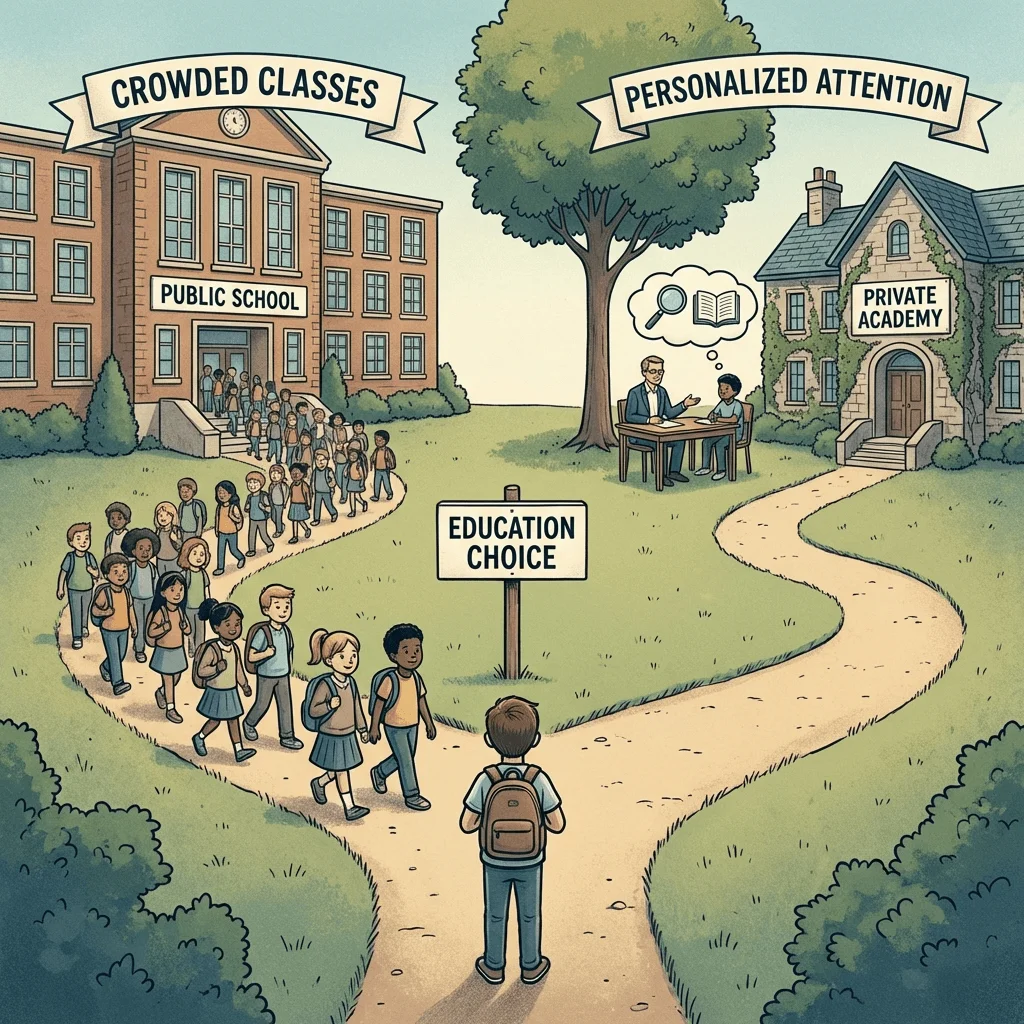
Short answer: Whether US high school is worth it has no single yes or no that holds for every family. It depends on whether three things line up: the student's readiness (the ability to live away and be independent, and whether their language can keep up), the family's budget (this is a multi-year commitment, not a one-time cost), and your real goals for college and growth. When the three match, it usually is worth it; when one of them is clearly not in place, the steadier move is to close that gap first, or pick a better-fitting alternative — not to force it.
We're spending this much and sending our child this far — is it actually worth it?
That is the question many parents are really asking before they decide. The answer shouldn't come from another family's outcome; it comes back to your own three variables: is the child ready, can the budget hold, do the goals match. Below we break that framework down so you can place where your family is right now.
Who this is for / not for
"Worth it" and "not worth it" are rarely absolute — they are usually about whether things fit right now. The two columns below are directions for judgment, not labels for a child:
| Tends to be worth it for families where | Reconsider or wait if |
|---|---|
| The child has some capacity for independent living and can adapt to being away or semi-independent | The child still leans heavily on family; independence and self-management aren't there yet |
| English reading and expression can keep up with academic coursework, or there's time to build it ahead | English is still a clear distance from academic demands, with no adjustment buffer |
| The family has folded this multi-year cost into long-term planning without touching basic financial safety | Tuition and living costs would clearly squeeze the family's financial safety cushion |
| The goals are clear: they value the US curriculum, the language environment, or a specific path | It's mostly "everyone else is sending theirs," with no clear problem to solve |
| Someone can handle on-the-ground logistics — companion/guardian, housing | Local companion, guardianship, and housing are all still unsettled |
If neither column fits and a decision has to be made now, that usually means information is still missing — sort out the child's readiness, the budget, and the goals separately, then come back to this table.
This is a multi-year commitment: start with the budget boundary
US high school is a financial commitment that runs across several years, not a single expense. Tuition, living costs, housing, guardianship, flights, and insurance add up year over year, and they vary widely by location. We won't invent any specific figures here — for real cost ranges and line items, see the Complete Cost Guide for sending a US-born child back for high school, and treat the target school's and local actual quotes as the source of truth.
When weighing the budget, two questions help:
- If you fold this year-over-year cost into the whole family's long-term plan, does it touch the basic financial safety cushion?
- If things change midway (the child doesn't adjust, income fluctuates), is there room to adjust or step back?
The budget alone isn't the whole "is it worth it" answer, but it is the floor. Above that floor, the conversation moves to the child and the goals.
Is the child ready: maturity and adaptability
Money can be planned; a child's readiness can't be rushed. Attending US high school — especially away from home — tests a teenager on three fronts at once:
- Independent living: managing their own schedule, homework, emotions, and daily affairs without a parent always nearby.
- Language: whether English reading and expression can hold up in reading- and writing-heavy courses like history, science, and literature — the key being whether there's enough adjustment buffer.
- Emotional and social: whether they can build a support system in a new environment and weather homesickness and culture gap.
The point isn't that the child must score full marks from day one, but where they are now, how big the gap is, and whether there's time to close it. If the gap is clear and there's no buffer, preparing a year or two earlier — or choosing a more transitional option — is usually steadier than forcing it.
Alternatives: when another path makes more sense
"Not doing US high school" doesn't mean "giving up" — it just means choosing a path that fits the present better. Several common alternatives each have their own use case:
- Staying in the current system: when the child is doing well in their current track with clear goals, or when readiness or budget isn't in place yet, staying put to close the gaps is often steadier than a rushed switch. A good fit for families whose direction isn't settled and who aren't in a hurry to change now.
- US public high school: relatively contained cost, but it usually requires conditions to line up — local residence, school district, and status. A fit for families who can settle locally and value cost-efficiency. For how to choose, see How to choose a San Diego public high school.
- US private high school: often more flexible on curriculum, class size, and support resources, at the cost of higher fees and an application bar. A fit for families with the budget in place who value personalization or a boarding environment. For weighing public vs. private, see Public or Private?.
- Online US high school: lets the child take a US curriculum and earn US enrollment from home, removing the costs of leaving home and settling in — but it asks a lot of self-discipline, and the social and campus experience is different. A fit for families not ready to send the child away yet, who want to bridge coursework or keep a transitional option open.
- Domestic international / bilingual schools: access to bilingual and international curricula at home, close by with a gentle transition — though they still differ from studying in the US on language environment and college pathway. A fit for families who want to balance staying close with an international track and aren't going abroad yet.
Every path has trade-offs, and none is optimal for all families. The key is matching the child's readiness, the family's budget, and the goals to a given path's use case.
Source and judgment boundaries
This article is a decision framework and a consultant's judgment to help you sort out the variables — not a promise of outcomes, and not a substitute for what you know about your own family.
- For specific figures like tuition and living costs, treat the target school's and local actual quotes as the source of truth — see the Cost Guide — and don't take another family's numbers from a few years ago as your budget.
- For a school's admissions policy, application timeline, and entry requirements, defer to each admissions office's formal reply.
- For legal matters like visa, status, tax, and guardianship, confirm with licensed professionals such as attorneys or accountants. This article is not legal, immigration, or tax advice.
- We don't promise any specific college or admission outcome — whether it's "worth it" depends on fit and the effort that follows, not on any single choice by itself.
FAQ
Is US high school worth it?
There's no answer that holds for every family. It depends on whether three things line up: the child's readiness, the family's budget, and the goals. When they match, it usually is; when one is clearly not in place, the steadier move is to close that gap first or choose an alternative path, rather than forcing it.
When is it NOT a good idea?
When the child's independence and language are still a clear distance from what's required with no adjustment buffer, or when tuition and living costs would squeeze the family's basic financial safety, or when the child is being sent simply because "everyone else is" with no clear problem to solve — in these cases it's better to wait, close the gaps, or pick a more transitional option.
What costs should we plan for?
It's a multi-year commitment, with common items including tuition, living costs, housing, guardianship, flights, and insurance — they add up year over year and vary widely by location. This article gives no specific numbers; for real ranges and line items see the Complete Cost Guide, and treat the target school's and local actual quotes as the source of truth.
What are the alternatives?
Five main types: staying in the current system to close gaps first, US public, US private, online US high school, and domestic international / bilingual schools. Each suits a different situation — families who value cost-efficiency and can settle locally lean public; those who value personalization and resources lean private; those not ready to send a child away might consider online US high school or a domestic international school. The key is matching the child's readiness, budget, and goals.
What grade is best?
There's no grade that's right for everyone — it depends on the child's English, math track, and family arrangements. We break it down grade by grade in the US-Born Family Roadmap for Grades 6–10: you generally want adjustment time for English and math, landing before the high-school transcript starts counting, but the exact point varies by child.
Related reading:
- Complete Cost Guide: Sending Your US-Born Child Back to America for High School
- How Returning to the US for High School Boosts Your Child's College Chances
- The US-Born Family Roadmap for Grades 6–10: What to Prepare and Decide Each Year
- Public or Private? How US-born Children Should Choose When Returning to US Schools
- San Diego Public High Schools 2026: CCA, Torrey Pines, Westview & Del Norte Compared
To apply this framework to your own family's situation, contact us and we'll sort out the variables together.
Related reading

California School Immunization Requirements for Children Vaccinated in China: Translation, Doses, and Catch-Up
California school immunization requirements for children vaccinated in China: required doses, the 7th-grade Tdap rule, how to translate a Chinese vaccine record, and how catch-up review works.

Bank Account for a Minor When a Parent Is Abroad: US-Born Child Checklist
How to open a bank account for a minor when a parent lives abroad: who must own it, age and SSN rules, in-person versus online opening, parental controls, and three youth-account examples.
DS-3053 and Your US-Born Child's Passport: Applying When One Parent Is Abroad
DS-3053 explained for a US-born child under 16: when the absent parent needs it, how to notarize it in China or the U.S., the 90-day window, what to bring, and how long a child passport takes.