US-Born Family's Hardcore Guide to San Diego Public Schools: G7-G10 Windows and Hidden Rules

Voice of San Diego's Parent's Guide is extraordinarily thorough. It's a perfect map for understanding the local education landscape. But it's a map drawn for "locals."
For new immigrants just landing in San Diego — or for US-born Chinese families (USCFs) returning with their American-born kids — this dense public education system holds dozens of "hidden pages" and unwritten rules that VOSD doesn't mention. Step wrong, and the cost is your child's high school GPA and college applications.
This is EdComm's hardcore operating manual for San Diego's public system.
Short answer: For US-born children returning to San Diego public schools, parents should proactively manage four items before arrival: the Grade 7-8 math pathway, English Learner (ELL) reclassification, Grade 9-10 A-G credit alignment, and each district's Choice / High School Selection window. All legal, timeline, and course-pathway statements in this article are bounded by California Education Code, UC's official A-G requirements, and district public pages; anything not publicly verifiable is treated as planning guidance, not a guaranteed rule.
Part 1: timing the return (G7-G10 game plan)
Many parents assume that an American passport guarantees easy public school enrollment whenever you arrive. True — public schools are obligated to accept any age-eligible child in their boundary.
But "you have a seat" and "you do well" are separated by a wide gap. Your return timing often directly sets the ceiling of what your child can achieve in the US high school system.
⏳ G7-G8: the last "golden window"
Returning in middle school is the highest-leverage, lowest-risk window. The parent's job is two things:
- Win the math pathway. California requires Grade 9 math placement policies to consider multiple objective academic measures rather than a single subjective judgment. For returning families, the practical move is to prepare transcripts, school assessment records, standardized test results, or district placement-test evidence before asking for the right math level. If your child does not enter an Accelerated/Honors pathway in Grade 7-8, reaching AP Calculus BC by Grade 11 becomes much harder.
- Shed the "ELL" label. A returning child may be classified as an English Learner (ELL). California law requires reclassification decisions to consider English proficiency assessment, teacher evaluation, parental opinion and consultation, and basic-skills performance. Parents should therefore track ELPAC and school-level assessment progress before the end of Grade 8. If a student enters Grade 9 still receiving ELD/ELL support, it may affect English, history, or other core-course pathways, depending on district and school scheduling rules.
⚠️ G9-G10: the high-risk transition zone — meet the "GPA killers"
Returning in Grade 9 or 10 is high-risk. The cost of mistakes is high because every grade now counts toward the college application GPA.
- The credit transfer trap (A-G Requirements). The University of California (UC) system has strict A-G course requirements. How will the district interpret a Chinese 9th-grade transcript? Chinese "politics" or "history" classes typically don't transfer as California social science credits — meaning your child walks in with "credit debt" they have to make up.
- The worst return window: mid-Grade 10. EdComm strongly advises against this. By that point, Grade 10 APs are half-finished and can't accept transfers. And Grade 11 course selection (usually spring) depends on local teacher recommendations and prerequisite courses your child doesn't have. The result: the most critical Grade 11 schedule lacks competitive courses.
Part 2: cracking San Diego's "school choice mystery"
Even if you don't buy in a top district, San Diego has cross-district school choice options. But you have to understand the timing game.
1. The Choice Window: miss it, wait a year
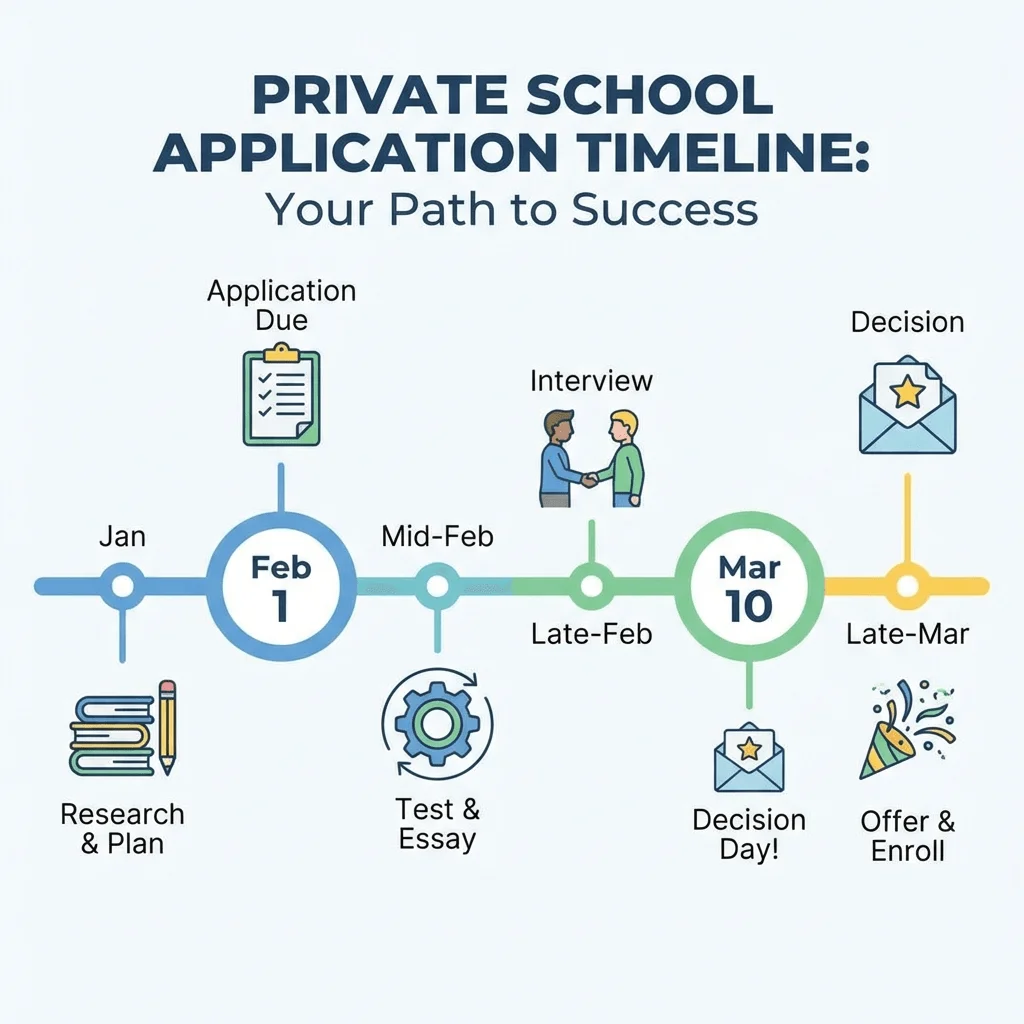
Many Chinese-American families are used to "buy whenever, transfer whenever." In San Diego, if you want to participate in School Choice / High School Selection, the application window usually opens during the prior school year, and the exact dates vary by district. SDUHSD's official 2026 High School Selection page, for example, lists the window as January 23, 2026 at 8:00 a.m. through February 12, 2026 at 4:00 p.m. — not a last-minute pre-school-year request.
So don't treat school choice as something to figure out after landing. Families often do not lose eligibility; they lose the deadline. If you arrive after March, many popular programs or academy-school selection processes may already be complete.
2. The brutal priority order in the lottery
Choice looks fair, but priorities are strict. Typical order:
- Sibling priority. Younger siblings of currently-enrolled students go first.
- Magnet programs. Designed to balance specific community enrollment.
- Intra-district transfers > inter-district applications.
EdComm reminder: CCA (Canyon Crest Academy) and SDA (San Dieguito High School Academy) are academy schools within SDUHSD's High School Selection system. SDUHSD's official page states that if interest exceeds available spaces, a random lottery may be held. So the real risk is not relying on hearsay that “there was no lottery in a past year”; it is <strong>failing to submit the application during the official window for the current year</strong>.
3. The Allen Bill: a "back door" without buying a home?
California's Allen Bill (AB 19) allows parents to apply for school enrollment in the district where they work rather than where they live.
Many parents working at Qualcomm or in Sorrento Valley but living in the outer suburbs eye this as a shortcut. The reality: California Education Code uses may deem language — a district may deem the student to meet residency requirements through a parent's employment location; it is not a must-admit rule. Districts still process requests according to capacity, policy, and annual availability. It's worth trying, but should never be your core strategy.
Part 3: don't be intimidated by the alphabet soup (special rights and resources)
New parents to the US public system get overwhelmed by acronyms — IEP, 504, ELD — and often misunderstand them.
Break the "stigma" around IEP / 504
Many Chinese families instinctively resist when a school recommends an IEP (Individualized Education Program) or 504 Plan evaluation. The first reaction: "My child is smart. He's not 'special needs.'"
This is the biggest cultural misunderstanding.
In the US system, IEPs and 504 Plans are not a mark of shame. They're a legal access pass to resources.
If your child has even mild ADHD, dyslexia, or significant test anxiety — once a 504 Plan is established, your child can legally receive:
- Extra time on tests (including, in the future, SAT/ACT).
- A separate, quiet testing environment.
- Permission to use specific assistive tools in class.
Smart parents leverage the rules to protect their child instead of being trapped by face-saving instincts.
ELD (English Language Development) is not a demotion
Earlier we said to shed the ELL label as fast as possible. That doesn't mean rejecting ELD support. During transition, public school ELD resources (free after-school tutoring, dedicated bilingual aides) are an excellent springboard to help US-born kids integrate quickly. What you should do: track progress closely, and the moment your child qualifies, push for reassessment. Don't let the system "trap" them inside.
Part 4: who controls the school's money? (advanced parent participation)
Chinese families care deeply about education at home — but often overlook the political dimension of participation in the school itself. VOSD lists parent involvement as one of the criteria for evaluating schools. But how do you actually participate?
- Beginner level: PTA / PTO (Parent-Teacher Association). Bake cookies, run the carnival, buy gifts for teachers. Good for visibility. But it doesn't touch the core.
- Advanced level: SSC (School Site Council). This committee — composed of the principal, teachers, and parent reps — decides how Title I money and parts of the core budget get spent. More computers? More counselors? Your voice here translates directly into resources.
- New immigrants' stage: DELAC (District English Learner Advisory Committee). This is the district's official advisory body for English Learner families. California law requires districts with 51+ English Learners to form one. This is the legitimate political stage for Chinese new-immigrant parents to organize, advocate for more Chinese bilingual resources, and push for better new-immigrant transition programs.
Source and data verification notes
To avoid hearsay-driven school advice, this article uses the following public sources as factual boundaries:
| Topic | Verified source | How this article uses it |
|---|---|---|
| ELL / Reclassification | California Education Code § 313 | Reclassification must consider multiple criteria: English proficiency assessment, teacher evaluation, parental opinion/consultation, and basic-skills performance. This article does not present ELPAC as the only requirement. |
| Grade 9 math placement | California Education Code § 51224.7 | Math placement should systematically consider multiple objective academic measures; parents should prepare verifiable evidence rather than rely only on subjective advocacy. |
| A-G requirements | UC Admissions: A-G subject requirement | UC has explicit A-G subject requirements; whether overseas or out-of-state coursework counts depends on district transcript evaluation and UC rules. |
| SDUHSD High School Selection window | SDUHSD High School Selection | The 2026 page lists a January 23-February 12 window and states that a random lottery may be held if demand exceeds available spaces; dates must be rechecked every year. |
| Allen Bill | California Education Code § 48204 | Parent-employment location can be a residency-eligibility pathway a district may recognize, not a guaranteed admission channel into capacity-constrained schools. |
| DELAC | California Education Code § 52176 | Districts with more than 50 limited-English-proficient pupils must establish a districtwide advisory committee; this article phrases that as “51+.” |
Important note: District policies, application windows, and course pathways can change each year. This article is a parent planning framework, not a substitute for the current district website, school counselor guidance, or a formal transcript evaluation.
FAQ
What are the most common traps US-born families fall into entering San Diego public schools?
Five common ones: (1) weak math-pathway evidence, causing placement below the student's true level; (2) not tracking ELL reclassification progress, which may affect Grade 9 core-course pathways; (3) missing the Choice / High School Selection window; (4) uncertainty in how Chinese coursework, especially politics or history, maps to A-G credits; (5) treating Allen Bill as a core strategy, even though it is not a guaranteed admission channel.
When is the Choice Window?
It depends on the district and must be checked on the current official website. For SDUHSD's 2026 High School Selection, the official window is January 23, 2026 at 8:00 a.m. through February 12, 2026 at 4:00 p.m. Parents should put target-district windows on the calendar a year ahead, not wait until after landing.
Can the Allen Bill (AB 19) let me attend a school district without buying in?
In theory, you can apply. AB 19 / Education Code § 48204 allows a district to treat a parent's employment location as one residency basis. But it is not a mandatory-admission back door; districts still handle requests under capacity and policy constraints. Worth trying, but don't make it your core strategy.
What's the difference between an IEP and a 504 Plan? Does my child need one?
Both are "legal access passes to resources," not a mark of shame:
- IEP (Individualized Education Program): a more comprehensive individualized education plan, for students with diagnosed learning disabilities.
- 504 Plan: for students with conditions like ADHD, dyslexia, or significant test anxiety. Provides extra time on tests (including future SAT/ACT), a separate quiet testing environment, and the right to use assistive tools.
If your child has any of these conditions, proactively requesting an evaluation is the smart move.
What are SSC and DELAC? How can Chinese parents participate?
- SSC (School Site Council): the committee that decides how Title I money and parts of the core school budget get spent. Parent reps here translate their voice directly into resources.
- DELAC (District English Learner Advisory Committee): the district-level advisory body for English Learner families. California law requires districts with 51+ ELLs to form one. This is the legitimate political stage for Chinese new-immigrant parents to organize and push the district for more Chinese bilingual resources.
Both are far more leveraged than baking cookies for the PTA.
Can a US-born child's Chinese transcript transfer directly into US high school credits?
Not fully. The UC system has strict A-G course requirements, and the district decides which Chinese courses are accepted. Watch out: Chinese "politics" and "history" typically don't transfer as California social science credits, leaving your child with "credit debt" to make up from day one.
Final word: knowing the rules is the prerequisite for using them
The San Diego public education system is like a massive, slow-running machine. It will not proactively accommodate every newcomer's special situation. But it has extraordinarily detailed, complex, and traceable rule codes.
For US-born returning families and new immigrants, the biggest disadvantage has never been language. It's the information gap.
The VOSD Decode 2026 series · 5 parts
- Part 1 · Status: San Diego Public Education 2026: A Slow-Motion Crisis
- Part 2 · Rankings: San Diego School Rankings Are Misleading
- Part 3 · Private schools: Bishop's vs Parker vs LJCDS: tuition and admissions
- Part 4 · Operations (this article): you just read it
- Full series entry: VOSD Decode 2026
Related US-born family reading
- Return timing: Why Grade 8 Is the Golden Window for US-Born Children Returning to America
- Guardianship: US-Born Child Returning Without Parents — Guardianship Guide
- Parent visas: Parent Visa Strategy for US-Born Children Returning — B2, F1, EB-5
- Application timeline: San Diego Private High School Rolling Admissions Timeline
Related reading
2026 School Choice Action Playbook: Timeline & Toolkit for US-Born Families
A 12-month school choice timeline, school visit questions, after-school care strategy, and the school district premium vs. private school financial model — a complete action playbook for US-born families.

San Diego Public Education 2026: A Slow-Motion Crisis Most Parents Underestimate
Voice of San Diego's 2026 report reveals a structural enrollment crisis in San Diego public schools: 27,000 students lost in the past decade, 112,000 more projected over the next 20 years. The school district premium is being rewritten — EdComm's deep dive into the VOSD series, part 1.

San Diego School Rankings Are Misleading: A Metric That Changes Everything
Niche A+ ratings and GreatSchools 10/10 may reflect community wealth, not school quality. VOSD's new Income vs. Test Score Metric, developed with UCSD, reveals the truth about SDUHSD's four high schools — CCA at +90.93 stands alone, while TP, SDA, and LCC all sit within the ±25 normal range.