2026 Nobel Prize Winners: A Family Guide to Explaining All Six Prizes to Kids (Plus UC San Diego's Nobel Alumni)
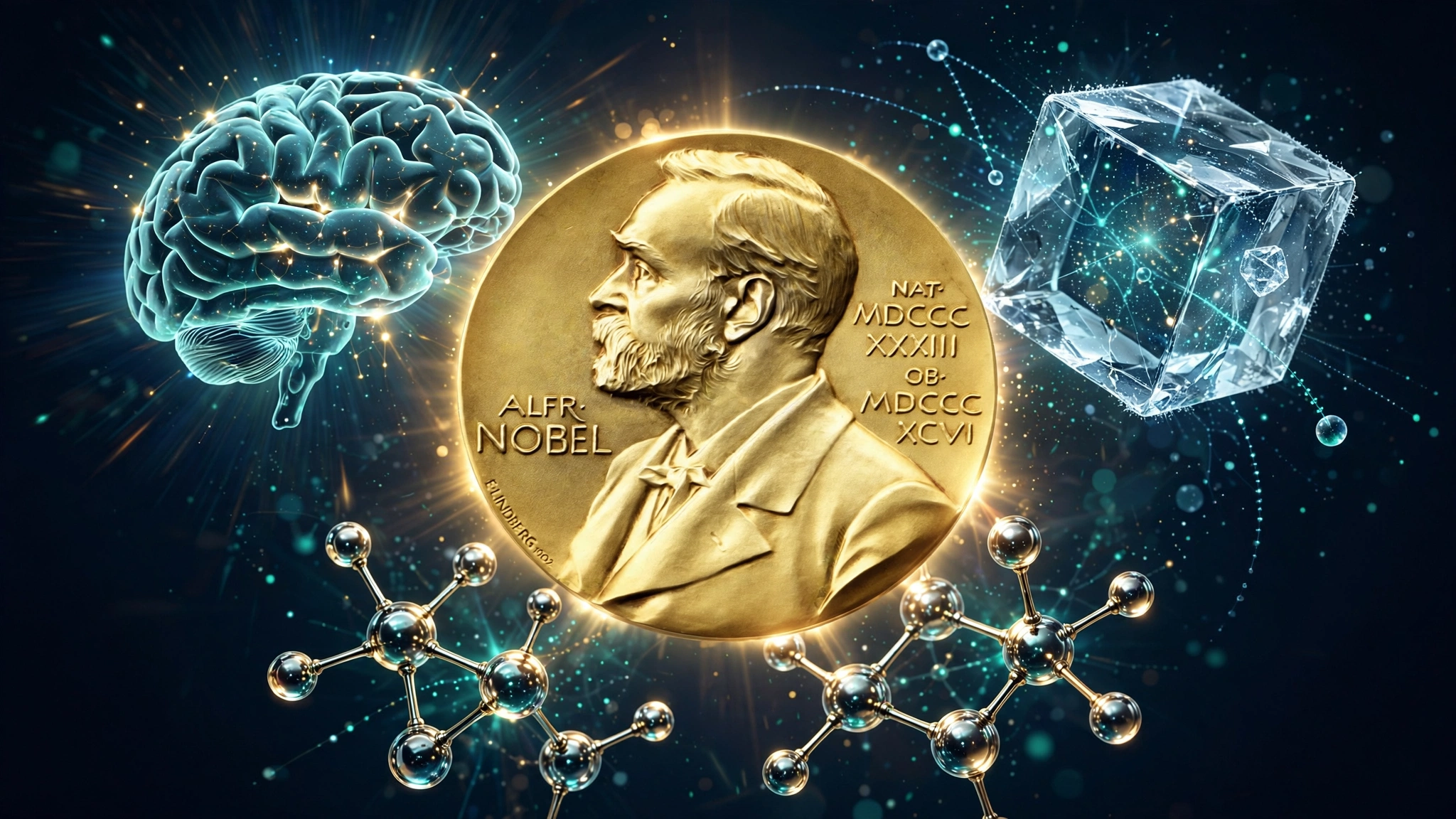
Short answer: The 2026 Nobel Prize winners, announced October 5–12, are Karl Deisseroth, Peter Hegemann, and Georg Nagel for optogenetics (Medicine); Francis Halzen for the IceCube Neutrino Observatory (Physics); Henri B. Kagan and Kenso Soai for asymmetric synthesis (Chemistry); Anne Carson (Literature); Navi Pillay (Peace); and Robert E. Hall and Michael Woodford (Economic Sciences). None of this year's laureates is affiliated with UC San Diego; the University of California link is Hall's UC Berkeley bachelor's degree.
This is EdCommGlobal. We clarify one San Diego school-planning or local-support decision at a time—and turn the next step into a practical plan.
"Our daughter starts middle school in the U.S. next year. We hear American classes expect students to discuss and speak up. How can she practice at home?"
This guide is for families whose children are still studying overseas and preparing to return to U.S. schools, and for families who have just arrived. Nobel week is a good excuse to talk science at the dinner table, and for a child about to join an American classroom, those conversations double as practice. Below: the six prizes with their official citations, age-by-age ways to explain the three science prizes, and a careful look at how UC San Diego is (and is not) connected to the Nobel story.
2026 Nobel Prize winners at a glance
| Prize | Announced | Laureates (affiliation at award) | Recognized for |
|---|---|---|---|
| Physiology or Medicine | Oct. 5 | Karl Deisseroth (Stanford, HHMI), Peter Hegemann (Humboldt University of Berlin), Georg Nagel (University of Würzburg) | Discoveries concerning light-gated ion channels and optogenetics |
| Physics | Oct. 6 | Francis Halzen (University of Wisconsin–Madison) | Decisive contributions to the IceCube Neutrino Observatory and the discovery of high-energy astrophysical neutrinos |
| Chemistry | Oct. 7 | Henri B. Kagan (Université Paris-Sud), Kenso Soai (Tokyo University of Science) | The discovery of non-linear effects and autocatalysis in asymmetric organic synthesis |
| Literature | Oct. 8 | Anne Carson (Canadian poet and classicist) | "Her bold and inventive oeuvre that, in playful dialogue with the classical tradition, has created new forms for contemporary literature" |
| Peace | Oct. 9 | Navanethem "Navi" Pillay (South African jurist) | Efforts to promote peace and international law |
| Economic Sciences | Oct. 12 | Robert E. Hall (Stanford), Michael Woodford (Columbia) | Microeconomic foundations of macroeconomic stabilisation |
A few details that help when you explain them:
- Medicine: Hegemann and Nagel found a light-sensitive protein, channelrhodopsin, in a single-celled alga. Deisseroth turned it into a light-controlled switch for nerve cells. The Nobel Assembly said the method makes it possible to switch individual nerve cells on or off in a living brain.
- Physics: IceCube sits under the South Pole: about a cubic kilometer of ice instrumented with 5,160 light sensors at depths of 1,450 to 2,450 meters, built to catch neutrinos, which rarely interact with anything.
- Chemistry: Many molecules come in two mirror-image forms, like left and right hands. The prize-winning work explains how reactions can favor one form and how a small preference can be amplified. That matters for drug manufacturing, because the two forms of the same molecule can act differently in the body.
- Peace: Pillay served as a judge at the International Criminal Tribunal for Rwanda, a judge at the International Criminal Court, and UN High Commissioner for Human Rights. The Norwegian Nobel Committee credited her with helping bring war crimes, crimes against humanity, and genocide to justice.
- Economics: The Royal Swedish Academy of Sciences said the laureates' work gave a theoretical foundation to the models central banks and governments use today.
How to explain the science prizes to kids, by age
Why these conversations help. Children returning from schools abroad often find that many U.S. schools and courses bring current events and science news into class discussion or ask for a short written response. Many courses also count class participation (speaking in class and contributing to group work) toward the grade; check each course's syllabus for how much. A child used to lecture-style classes may hesitate to speak up at first, and talking through one news story at home is practice for exactly that.
Our suggestion: talk it through in your home language first, then have your child try saying a sentence or two in English. Middle and high school students can write three to five sentences of their own view in English. If writing in English is still hard for your child, read US-Born Child Returning to U.S. School: Check English Writing; for what the first months back can look like, see Your Child's First Semester in America.
Optogenetics (Medicine)
- Grades K–2: Your brain has lots of tiny cells that pass messages to each other. Scientists found a protein that can "feel" light. Put it in a cell, turn on a light, and the cell starts sending messages; turn the light off and it goes quiet.
- Grades 3–8: The protein was first found in algae. Ask: why would algae need to sense light? Did the people studying algae imagine it would one day help study the brain?
- High school: Talk about the distance between basic research and its uses. Going from a light-sensing protein in algae to studying anxiety or Parkinson's disease took many steps and many years.
Neutrinos and IceCube (Physics)
- Grades K–2: There's a tiny particle that can fly straight through the Earth, and through you, almost without touching anything.
- Grades 3–8: Why bury a detector under Antarctic ice? The ice there is deep, dark, and very clear. When a neutrino does hit something in the ice, it makes a faint flash of light the sensors can record. Find the South Pole on a map together.
- High school: Talk about big-science collaboration. IceCube is built and run by an international collaboration; one idea took many institutions and many years to pay off.
Mirror-image molecules (Chemistry)
- Grades K–2: Hold up both hands. They look the same, but you can't stack one perfectly on the other. Many molecules have a "left-hand" and "right-hand" version too.
- Grades 3–8: A right-hand glove feels wrong on your left hand. Proteins in your body are picky in the same way, so the two mirror forms of one molecule can do different things inside you.
- High school: Look up the thalidomide case that chemistry classes often discuss, talk about why drugmakers need to control which mirror form they make, then read how this year's prize explains a small preference being amplified.
The other three prizes, for middle and high schoolers
- Literature: Carson translates and reworks ancient Greek poetry and moves freely between poetry, essay, and scholarship. A reader in high school could start with her Sappho translations.
- Peace: Start with one question: when crimes happen during a war, who should put people on trial?
- Economics: Start at home: when prices go up, why does the central bank change interest rates? This year's laureates built the models behind that kind of stabilization policy.
UC San Diego and the Nobel Prize: alumni vs. researchers
None of this year's laureates lists UC San Diego as an affiliation. The University of California connection is economics laureate Robert E. Hall, who, according to the Hoover Institution, earned his BA at UC Berkeley and his PhD at MIT.
UC San Diego's closer ties are to earlier laureates, and they fall into two groups.
UC San Diego alumni (per UC San Diego Today, 2026)
- Fred Ramsdell earned his UC San Diego bachelor's in biochemistry and cell biology in 1983 and shared the 2025 Nobel Prize in Physiology or Medicine with Mary Brunkow and Shimon Sakaguchi for work on how the immune system avoids attacking the body. UC San Diego describes him as a first-generation college student who spent two years at Foothill College before transferring, then earned his PhD at UCLA. He gave the keynote at UC San Diego's All Campus Commencement on June 13, 2026.
- Bruce Beutler, a UC San Diego Biological Sciences alumnus, won the 2011 Nobel Prize in Physiology or Medicine.
- Susumu Tonegawa, a UC San Diego Biological Sciences alumnus, won the 1987 Nobel Prize in Physiology or Medicine. MIT and Kyoto University reported that he died on July 11, 2026, at 86.
In UC San Diego Today's words, Ramsdell is "the third UC San Diego Biological Sciences alumnus to receive the Nobel Prize in Physiology or Medicine."
Studied or worked at UC San Diego
- Venki Ramakrishnan, 2009 Chemistry laureate, is described by UC San Diego as a former Biology graduate student.
- Geoffrey Hinton shared the 2024 Physics prize with John Hopfield. According to UC San Diego Today, he was a visiting scholar in UC San Diego's Department of Psychology from 1978 to 1980 and returned in spring 1982 as a visiting assistant professor, as part of the Parallel Distributed Processing (PDP) group led by David Rumelhart and James McClelland. Backpropagation was popularized by Rumelhart, Hinton, and Ronald Williams in a 1986 Nature paper. Hinton also co-developed the Boltzmann machine with Terrence Sejnowski, a concept the Nobel committee specifically cited. Sejnowski is now a professor in UC San Diego's School of Biological Sciences and at the Salk Institute.
The distinction matters when you read university marketing: "alumnus" means someone studied there; "researcher" means the campus was one stop in a career.
As advisors, one reminder: a long list of Nobel alumni doesn't mean a university is right for your child. When we look at colleges with families, we start with how the intended major's courses are structured, how undergraduates get into labs, and how hard it is to change majors, and only then look at reputation.
What Nobel connections tell you about a college, and what they don't
What they show: a university has a long research record in certain fields and has trained or attracted people who made major discoveries. Three Medicine laureates from UC San Diego's Biological Sciences program is a concrete example.
What they don't show:
- Nobel-winning work is often decades old. It reflects research history, not today's undergraduate classroom.
- Laureates may no longer be on campus, and those who are may not teach undergraduates.
- A Nobel count can't replace looking at the major's courses, class sizes, and undergraduate research access.
Ramsdell's own route, community college to UC San Diego, is a reminder that there is more than one path.
Our view: for K–12 families, Nobel week is best used to build a habit of reading science news, not as a college-selection metric. There is also no need to pay for an expensive camp or branded program to borrow some Nobel shine. If your child is genuinely curious about a field, school science classes, clubs and free local science events are enough to start. When your child starts looking at colleges, these questions are more useful:
- How do undergraduates get into labs: by emailing professors, or through a structured program?
- Are there research-for-credit courses or an honors thesis option?
- Can first- and second-year students take part?
Check each department's website and the admissions office for the answers.
How EdCommGlobal can help
We are a K-12 education planning and local support team based in San Diego. For the topics in this guide, we can help with:
- Before you decide: Starting from how your child is doing in school now, we look together at which grade to return in and how math, English, and science will connect after the move, and list what still needs to be confirmed. For the trade-offs of returning in different grades, read When Should Your US-Born Child Return to School in the US?.
- College planning: We put courses, activities and application preparation on one timeline and move at your child's actual pace. See college counseling and university preparation.
We don't promise admission results; colleges make those decisions. The experiences and voice in an application stay the student's own, and we won't recommend paid programs that have nothing to do with your child's interests just to dress up a résumé. What a service covers is agreed before it starts. To talk it through, contact EdCommGlobal with your child's current grade, school and courses (especially math and English), and the year you plan to return or apply.
Related reading:
- What UC San Diego's 2026 ARWU ranking means for San Diego families
- UC San Diego's AI research and startup news, and what it says about San Diego education
- UC San Diego professor Liangfang Zhang's 2026 MacArthur Fellowship: what families can take from it
FAQ
Who are the 2026 Nobel Prize winners?
Medicine: Karl Deisseroth, Peter Hegemann, and Georg Nagel (optogenetics). Physics: Francis Halzen (IceCube and high-energy astrophysical neutrinos). Chemistry: Henri B. Kagan and Kenso Soai (non-linear effects and autocatalysis in asymmetric organic synthesis). Literature: Anne Carson. Peace: Navi Pillay. Economic Sciences: Robert E. Hall and Michael Woodford (microeconomic foundations of macroeconomic stabilisation). The prizes were announced October 5–12, 2026.
What are the six Nobel Prize categories?
Physiology or Medicine, Physics, Chemistry, Literature, Peace, and Economic Sciences. The Economic Sciences prize is formally the Sveriges Riksbank Prize in Economic Sciences in Memory of Alfred Nobel and is announced last; in 2026 all six were announced between October 5 and 12.
How do you explain optogenetics to a child?
Brain cells pass messages to each other. Scientists took a light-sensing protein from algae, put it into nerve cells, and can now turn those cells on or off with light. Researchers use it in animal studies to learn which cells drive which behaviors.
Why do mirror-image (chiral) molecules matter?
Many molecules come in left- and right-handed forms. Proteins in the body respond to the two forms differently, so the same drug molecule can act differently depending on its form. Drugmakers need to control which form they produce, and this year's Chemistry prize explains how reactions can favor one.
Did any 2026 Nobel laureate come from UC San Diego?
No. None of the six prizes went to someone affiliated with UC San Diego. The University of California connection is Robert E. Hall, who earned his bachelor's degree at UC Berkeley.
Which Nobel laureates are UC San Diego alumni?
According to UC San Diego Today, three Biological Sciences alumni have won the Nobel Prize in Physiology or Medicine: Susumu Tonegawa (1987), Bruce Beutler (2011), and Fred Ramsdell (2025). Venki Ramakrishnan, the 2009 Chemistry laureate, was a Biology graduate student there. Geoffrey Hinton (Physics, 2024) was a visiting scholar and visiting assistant professor, not an alumnus.
When is the Nobel Prize ceremony?
By tradition on December 10: the Peace Prize in Oslo and the other prizes in Stockholm.
Sources and verification notes
Sources below were accessed October 18, 2026. Citations in the table are summarized; the official English text on nobelprize.org governs.
- Nobel Prize announcements, 2026: Medicine, Physics, Chemistry, Literature, Peace, Economic Sciences
- Peace Prize committee remarks: Al Jazeera
- Robert E. Hall's education: Hoover Institution
- Ramsdell, Beutler, Tonegawa, and Ramakrishnan's UC San Diego ties: UC San Diego Today, March 2026
- Hinton at UC San Diego: UC San Diego Today, 2024
- Tonegawa obituaries: MIT, Kyoto University
Compiled by EdCommGlobal from public sources; "Our view" reflects our editorial judgment. Check each university's website and admissions office for current undergraduate research opportunities.
Related reading
UC San Diego Is the No. 6 U.S. Public University: What the 2027 U.S. News Ranking Means for Families
UC San Diego ranks No. 6 among U.S. public universities for the fourth consecutive year, while undergraduate AI rises to No. 8 and economics to No. 12. Here is what those results do—and do not—mean for San Diego families.
UC San Diego's AI Research and Startup News: What Families Can Learn About San Diego Education
UC San Diego is leading a national AI research operations center and supporting research-based startups. EdCommGlobal explains what families can learn from these developments, with practical learning ideas and the eligibility, fees, and completed dates of the 2026 REHS high school research program.
UC San Diego Ranks No. 4 Among U.S. Public Universities: What It Means for San Diego Families
UC San Diego ranks No. 20 worldwide and No. 4 among U.S. public universities in the 2026 Academic Ranking of World Universities. For Chinese families exploring San Diego public and private schools, the bigger story is how a leading research university raises the educational ceiling of an entire city.