SDJA Jewish Education in Middle & High School

EdCommGlobal's view: For SDJA students in grades 6–12, the school's Jewish identity appears in the timetable, classroom discussion, holidays, and community participation. The school describes about one fifth of the Upper School day as Jewish learning. High school Jewish studies have graduation requirements, with a separate duration listed for international students. Parents should understand what their child would study and how they would participate before assessing fit.
If you are new to San Diego Jewish Academy (SDJA), start with our middle and high school overview. Families in China often ask whether this is a religious school and whether a child unfamiliar with Jewish culture can manage. Timetables, course materials, and student activities help make those questions concrete.
What does “pluralistic” mean at SDJA?
SDJA describes itself as a pluralistic Jewish day school. It explains that it is not affiliated with one Jewish denomination or synagogue; families represent different traditions and levels of religious practice. Pluralism describes those traditions and viewpoints coexisting within the school. The school still has a clear Jewish identity. SDJA admissions FAQ.
For grades 6–12, the school says about one fifth of the Upper School day is devoted to Jewish learning. Students study general subjects alongside Jewish courses. This is part of everyday education, rather than an optional interest activity. SDJA admissions FAQ.
What do middle and high school students study?
Middle school, grades 6–8: This stage belongs to Maimonides Upper School and emphasizes independent learning, critical thinking, and community responsibility. The Jewish Life page describes learning, experiences, reflection, holidays, and Tikkun Olam, understood as acting to improve the community and world. Ask about the intended grade's weekly timetable and expected prior knowledge. Middle school introduction.
High school, grades 9–12: The 2025–26 Program of Studies lists four years of Jewish studies for graduation, alongside English, mathematics, history, science and technology, world languages, arts, and experiential education. The 2025–26 school profile separately states two years of Jewish studies for international students.
Grade 9's Pathways to Jewish Identity is required; the guide also says students entering a Jewish day school for the first time must take it. Grades 10–11 study Jewish texts, thought, and history with course choices. The grade 12 required seminar addresses modern Israeli history and the Holocaust. These are 2025–26 published arrangements. Transfer students should confirm the intended year's requirements, existing credits, and graduation timeline.
Both general subjects and Jewish studies use timetable space. Review the child's prior credits, English skills, and interests to understand the academic workload.
Pay attention to classroom discussion
The grade 9 course description introduces havruta: paired text study, listening to another interpretation, and comparing understandings. The guide also describes close reading, discussion, debate, reflection writing, and projects, and says English translations are provided for grade 9 materials. 2025–26 Program of Studies.
Would the child be willing to read closely, explain reasons, listen to peers, and reconsider an interpretation after discussion? These abilities are practiced in class, but readiness depends on English reading and expression, entry grade, and teacher support. Ask about the intended grade's reading and assignment expectations before deciding.
Jewish life outside lessons also shapes belonging

The Jewish Life page describes holidays, community action, and reflection. The Student Experience page also describes weekly school-wide Shabbat activities. These contribute to shared memories among students.
The high school introduction states that the school seeks graduates with personally meaningful connections to Judaism, Israel, and the Jewish people. Families should consider that educational purpose alongside their child's willingness to participate. If the child has concerns, explore the activities and classes directly before deciding. High school introduction.
What should families without a Jewish background ask?
The published nondiscrimination policy lists race, color, national origin, and ethnicity; that clause does not separately state religious background. Confirm admission eligibility and participation expectations rather than inferring them from the clause. Admissions FAQ and nondiscrimination policy.
Ask about four areas:
- Eligibility and transition: How will the child's background, English, and previous courses be assessed? Which credits or required courses might need additional work after a transfer from China?
- The actual timetable: How much weekly time is allocated to Jewish studies, Hebrew, and general subjects? What support is available to students new to Jewish studies?
- Participation expectations: What is expected of students and families at holidays, Shabbat, classroom discussion, and community activities? How can the child raise questions?
- The child's response: After reviewing materials, visiting a class, or speaking with students, does the child want to join this community?
EdCommGlobal's reading of the academic approach
Consider course demands, thinking skills, and cultural fit together. Published materials describe Jewish studies graduation requirements and a separate duration for international students. Lessons emphasize close reading, discussion, and reflection, while values extend into holidays and community life. Academic performance should not be attributed to an assumed talent of a religious or ethnic group.
For grades 6–12 applicants, obtain relevant course information and consider English literacy, transfer timing, and interests. Parents' support for the school's values should be considered alongside the child's own response to its classrooms and community. Courses, admission, and participation requirements need written confirmation for the intended year.
Frequently Asked Questions
Can a child without a Jewish background manage SDJA's Jewish courses?
Jewish learning is formal coursework, and high school has graduation requirements. Ask about weekly study time, prior knowledge, and support for newcomers before judging the child's readiness and willingness to participate.
What exactly does “pluralistic” mean?
The school is not affiliated with a single Jewish denomination or synagogue, and families represent different Jewish traditions. The term describes traditions coexisting within a school with a clear Jewish identity.
Do international students have different Jewish studies requirements?
Published high school materials state graduation requirements and list a separate duration for international students. Confirm the intended year's requirements in writing with the school; EdCommGlobal can help organize those questions.
Sources and verification dates
Source verification: October 6, 2026. High school course details refer to the published 2025–26 guide. Future course offerings, credits, and activities may change.
Related reading

SDJA Middle & High School: A Parent Guide
Explore SDJA's middle and high school grades, Jewish education, academics, daily life, admissions routes, and 2026–27 costs for families moving from China.

San Diego Private School Application Deadlines 2027–28
Compare application deadlines, decision dates and open houses for 10 San Diego private schools entering in fall 2027, with links to each school's official admissions page.
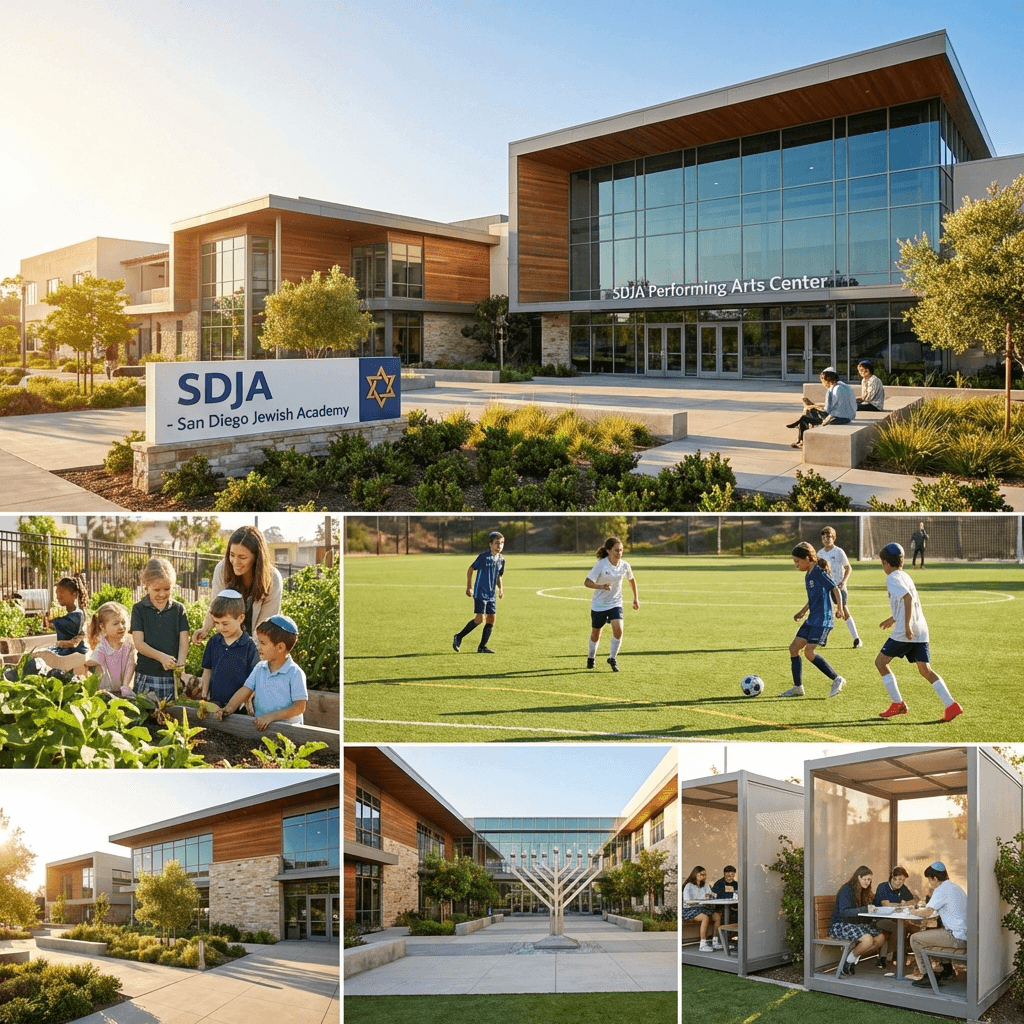
San Diego Jewish Academy: A Top Private School Balancing Academics and Humanity
As a highly reputed private school in San Diego, SDJA has been known for its solid academic strength, rich featured curriculum, and comprehensive quality education since its establishment in 1979.