SDJA Middle & High School: A Parent Guide

EdCommGlobal's view: San Diego Jewish Academy (SDJA) is a private Jewish day school in Carmel Valley, San Diego, serving early childhood through grade 12. For middle and high school families, its defining features include general academics alongside Jewish education, a community spanning several school divisions, and learning through gardens, arts, experiences, and shared meals. Assess the child's admissions route, academic readiness, housing, and cultural fit together.
Parents in China may first ask how the school's Jewish identity affects classes and daily life. Families of US-born children returning from China may also wonder how their child would enter an American classroom and peer community. Understand the school's structure and an ordinary student's day before deciding whether to apply.
1. Which grades does SDJA serve?
The divisions are the Early Childhood Center, Golda Meir Lower School (K–5), Maimonides Middle School (6–8), and Maimonides High School (9–12). These divisions share a school community, allowing families to consider continuity across stages.
This guide focuses on school choice for grades 6–12.
2. What does its Jewish identity mean in daily life?
SDJA places Jewish values and community at the center of its education. Its admissions FAQ explains that “pluralistic” means the school is not affiliated with a single Jewish denomination or synagogue. It describes about one fifth of the Upper School day as devoted to Jewish learning. Courses, holidays, and shared activities shape the student experience.
For families without a Jewish background, EdCommGlobal can help ask how students in the intended grade take part in classes and activities, and what the school expects of families. Review the actual timetable and course requirements rather than deciding from the school's name alone.
3. What should families check about academics?
SDJA describes its teaching framework through the Academic Empowerment Wheel, supporting learning around students' interests, abilities, and goals. For middle or high school entry, review the intended grade's timetable, course descriptions, placement requirements, English writing expectations, mathematics placement, and transfer arrangements.
For a child educated mainly in China, we start with recent transcripts, course content, and English writing samples. US citizenship does not establish readiness for American classroom reading, discussion, and writing. Application eligibility and the support needed after enrollment are separate questions.
4. School life extends beyond classrooms
SDJA's campus life includes Levana's Garden, a 5,000-square-foot learning space used for gardening and environmental science activities across school stages. K–12 students have daily community lunch, included in the relevant fees, with meals arranged under kosher requirements.
A list of activities does not mean every student participates in the same program. Ask about an ordinary week in the child's intended grade: classes, lunch, activities, and where students turn for help. The child's own impressions after a visit also matter.
5. International applicants and US-born children have different questions
For a child who needs an international student route, the international admissions page describes limited I-20 availability after high school acceptance. Application materials include transcripts, recommendations, an online interview, and evidence of English proficiency. The school also expects someone in the guardianship arrangement to take on actual parental responsibilities. Confirm the current grade, status, and care requirements with admissions. See our US high school application guide and California minor guardianship guide for the broader planning questions.
For a US citizen returning from China, the focus is usually grade and course transition, local housing, transportation, learning support, and cultural adjustment. Citizenship does not replace formal school admission or establish that the child will enjoy SDJA's educational approach. Clarify the child's status, the parents' residence plans, and who will provide daily care separately.
6. How much does SDJA cost?
Use SDJA's regular tuition as a starting point and check the international student page for the separate international charges. The figures below are for 2026–27. The regular column adds the published base tuition and fees:
| Grades | Regular tuition plus fees | Cost listed on the international page |
|---|---|---|
| 6–8 | $41,350 | $46,350 |
| 9–12 | $43,765 | $48,765 |
The regular tuition page lists a $600 annual family security fee, while the international page lists $575. Ask the school to resolve that discrepancy for the child's route. K–12 lunch is included in the relevant fees, but housing, transportation, insurance, and some activities or examinations may require a separate budget. Our US high school cost guide covers broader family planning.
Although the international page lists middle school costs, its I-20 explanation and international program form refer to high school. Middle school applicants should confirm eligibility and request a complete written fee schedule for their status.
EdCommGlobal's three checks for parents
- Educational approach: General academics and Jewish learning both have an explicit place in school life. Understand how students learn and whether the child wants to participate.
- Family route: International applicants need to check grade eligibility, English requirements, I-20 availability, care, and international charges. US-born children returning from China need course transition, English literacy, housing, and transportation planning.
- Whether to apply: If the family supports the approach and the child is interested in the daily experience, put SDJA on a shortlist. Compare written answers about the intended year's courses, admissions conditions, and fees with the child's own impressions.
Frequently Asked Questions
Is SDJA a religious school? Can a child from a non-Jewish family apply?
SDJA is a pluralistic Jewish day school. Jewish learning is a formal part of its curriculum and community life, while the school is not affiliated with a single Jewish denomination. Ask admissions about current eligibility, family expectations, and how the child would participate before deciding whether it fits.
How much is annual SDJA tuition?
For 2026–27, regular tuition plus fees is $41,350 for grades 6–8 and $43,765 for grades 9–12. The international page lists $46,350 and $48,765 respectively. Security fees are additional, and the two pages list different amounts. Request a written fee schedule for the child's status and intended year.
What should a family applying from China check first?
Confirm whether the intended grade accepts applications, whether the child needs the international route, and the complete fee schedule. Ask separately about I-20 availability, English requirements, and care arrangements. Middle and high school international policies should not be assumed identical.
Sources and verification dates
Original source verification: October 6, 2026. English version added October 8, 2026. School facts retain the Chinese article's original verification date. This translation does not establish updated admissions conditions, fees, or capacity. Obtain written confirmation for the intended school year.
Related reading
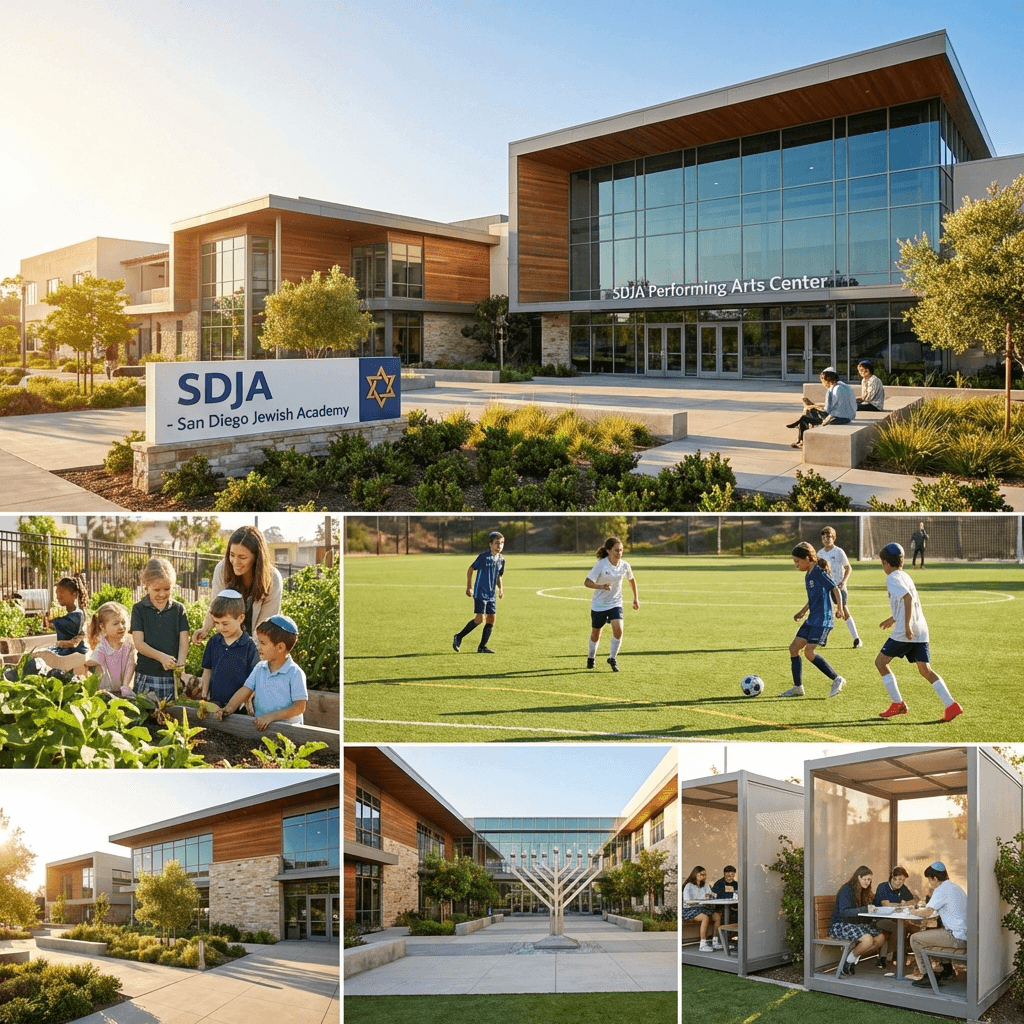
San Diego Jewish Academy: A Top Private School Balancing Academics and Humanity
As a highly reputed private school in San Diego, SDJA has been known for its solid academic strength, rich featured curriculum, and comprehensive quality education since its establishment in 1979.
San Diego School Visit: 20 Questions About Academics and Fit
Use 20 practical questions to evaluate academics, workload, student support, college counseling, logistics, and fit during a San Diego school visit.

CCA vs Torrey Pines: What Class of 2026 Data Shows
Neither school publishes a complete Class of 2026 destination list. Compare CCA and TPHS using 2024 NSC, 2025 UC, course structure, and family-fit evidence.