San Diego Public Education 2026: A Slow-Motion Crisis Most Parents Underestimate

Short answer: Voice of San Diego's 2026 report (with UC San Diego) finds San Diego public schools lost about 27,000 students over the past decade and project ~112,000 more over the next 20 years. The main driver is declining birth rates (~30% since 1990) plus high cost of living pushing young families out — not students switching to private, charter, or homeschool en masse. This is a county-wide trend observation, not a forecast for any single school. Some districts (Lemon Grove) have stabilized; Carmel Valley/Del Mar premium districts are still affected but not uniformly.
Voice of San Diego, partnering with UC San Diego, just released the 8th edition of A Parent's Guide to San Diego Schools. It covers public school data across the county and — for the first time — folds in private schools. The findings reveal a quiet but decisive shift in the structural logic of San Diego education.
EdComm cuts through the dense data to surface the truths that actually affect Chinese-American families making housing and school decisions.
The school district premium and the enrollment trend are moving in opposite directions
If you're a Chinese-American parent living in Carmel Valley or Del Mar, watching home prices hold firm — or tick up — you probably feel: "As long as I'm in a top school district, my kid's education is locked in."
The 2026 VOSD report tells a quieter, opposite story behind those prices: San Diego's public school system is in the middle of a structural enrollment contraction.
Sweetwater Union district leader Moises Aguirre calls it a "slow-motion shockwave" — easy to watch, easy to underestimate, and increasingly hard to ignore as resource allocation tightens across the county. It's not that any one school got worse. The whole map is being redrawn.
What's actually happening
In early 2026, Voice of San Diego (VOSD) put it bluntly:
It's like a slow moving train wreck. You see it coming but it's in slow motion, so it's hard to fully understand the impact that it's going to have.
— Moises Aguirre, Superintendent, Sweetwater Union High School District
This isn't one school's problem, or one district's problem. It's a structural contraction across the entire San Diego public education system. The root cause isn't that schools got worse — it's a simpler fact: there are fewer kids.
The core tension: because home prices in Carmel Valley and Del Mar are so high (entry-level homes long past $2M), young families with school-age children can't afford to buy in. They head north (North County) or inland. Who stays? Higher-net-worth households whose children are already grown or close to it.
The result: top districts are gentrifying — and the price is irreversible student loss.
The big picture: three numbers you need to know
From California Department of Finance and California Department of Education data cited in the VOSD report:
| Metric | Number |
|---|---|
| Net public school enrollment loss across the county, 2014-2024 | About 27,000 students (down 5%) |
| Projected further loss over the next 20 years | About 112,000 students (down 30%) |
| Decline in San Diego birth rate since 1990 | About 30% |
The pain isn't evenly distributed
Some districts are bleeding. Others are barely holding on:
| District | 10-year enrollment change | Status |
|---|---|---|
| South Bay Union | -37% | Extreme case: already closing and consolidating campuses |
| Encinitas | -21% | Warning sign: SDUHSD's most important feeder elementary district is drying up |
| San Diego Unified | -12% (about 16,000 students) | County flagship: lost ~16,000 students, facing a major budget gap |
| SDUHSD (high school level) | Slight recent decline (VOSD doesn't break out a specific number) | Looks stable thanks to inter-district transfers, but elementary feeder pipeline is shrinking |
Even if you live in one of San Diego's most coveted school districts, the downward pressure on enrollment is real.
EdComm's take: for families with kids currently in elementary or middle school, this is actually good news. By the time your child reaches high school, those "fight for a seat" top public schools may have better per-student resourcing — more counselor attention, more lab access — simply because there are fewer students competing for the same infrastructure.
So where did the kids go? — three common misconceptions
When parents hear "fewer students," the instinct is to ask:
- "Did they all go to private school?"
- "Did the charters take them?"
- "Is everyone homeschooling now?"
VOSD addresses each one. The answer may surprise you.
Misconception 1: "They all went private"
The fact: total private school enrollment in San Diego is essentially flat. Privates haven't "stolen" students en masse. Capacity is limited and tuition is a barrier — they were never going to absorb the public school loss.
Misconception 2: "Everyone's homeschooling now"
The fact: homeschooling has doubled, but the total is tiny. In 2024, about 0.82% of San Diego students were homeschooled. Even doubled, the number remains "inconsequentially low" and can't explain the broader decline.
Half-right: "Charter schools took the students"
The fact: charter enrollment grew about 41% over the past decade — but with an asterisk. Most of that growth came from virtual charters (online schools). VOSD specifically notes these schools "often have spotty academic records," and many of their students live in neighboring counties, not actually pulled from San Diego.
More importantly: charters are themselves public schools. Counted in, the total public system dropped 5%. Strip out charters and look just at traditional publics — the decline doubles to 12%.
The real answer: students didn't "go" anywhere. They were never born.
VOSD's conclusion is unsparing:
What's really happening is simple — San Diego just has fewer kids than it used to.
San Diego Unified Deputy Superintendent Nicole DeWitt put it even more plainly:
The cost of living keeps going up, particularly in a city like San Diego. We just have fewer children in our boundaries than we used to. That's an external force we can't control.
California's Department of Finance enrollment forecaster Alexander Alvarado offered an even more sobering read:
We've never experienced sustained enrollment decline. We're in completely uncharted waters. There's nothing in the data right now that suggests we're going back to growth.
Two forces compound into a trend you can't reverse short-term:
- Cost-of-living crisis. In survey after survey, families leaving San Diego list high cost of living as the top reason. The pandemic-era rise of remote work only accelerated it.
- A birth rate cliff. Down ~30% since 1990. Not unique to San Diego — every major global city is facing the same demographic turn. But for a public school system funded by per-pupil enrollment, that means a slowly eroding fiscal foundation.
| Suspected cause | Actual data | Impact on the school district premium |
|---|---|---|
| Private schools | Essentially flat | No meaningful impact |
| Homeschooling | Doubled but tiny in absolute terms | Negligible |
| Charter schools | +41% (largely virtual) | Structural threat: diverts traditional-public funding |
| Demographic decline | -30% (the real cause) | Fatal: not just fewer students, but fewer "futures" |
What this means for your child
It's a challenge — and a chance to step out of the over-competition trap.
Resource reallocation, not depletion. Funding follows the student, but VOSD notes large districts like San Diego Unified are pouring billions into facility upgrades. The picture isn't one of evaporating resources — it's one of resources being restructured. Parents need to watch: is the school protecting its core AP catalog while introducing future-relevant specialty programs?
Re-examine the "premium" logic. We used to pay a $300K-$500K premium for a school district because it was the only ticket to a top public education. As enrollment falls, the scarcity behind that ticket dilutes.
Practical take: if you haven't bought yet, this is a moment to watch non-traditional districts make competitive moves. If you already own, watch how your district uses marketing and specialty programs to stay vibrant (see Lemon Grove below).
How districts are responding — some patching, some amputating
Lemon Grove: a turnaround story
Lemon Grove lost about 22% of its students over the past decade. When new superintendent Marianna Vinson stepped in, the board gave her a single directive:
We needed to stop the bleeding.
What she did:
- Toured every school in the district, helping teachers and staff understand "enrollment = your salary, your programs."
- Pushed into community groups and built social media presence.
- Pitched real estate agents on Lemon Grove schools so they'd recommend them when selling homes.
Result: Lost 69 students last year (about 2.2%); only 12 students this year (about 0.4%).
Vinson herself admits: "We have to work even harder. Every year only gets harder."
San Diego Unified: spending big, but is it enough?
The county's largest district picked another path: pour billions of bond money into renovating aging campuses, add middle-school athletics, expand community schools — try to keep families with better facilities and services.
South Bay Union: when patching isn't enough
The South Bay Union story is the grimmest. When enrollment dropped 37%, no marketing campaign could pull it back. Superintendent Espinoza adjusted curriculum to match community needs, but the board ultimately voted to close 3 schools.
EdComm's take: when public schools are forced to "market themselves like private schools," that itself signals a deeper shift — the era of public education's "default monopoly" is ending. In this new competitive landscape, parental choice has never mattered more. The complexity of choosing has never been higher.
EdComm's read: three action signals for Chinese-American families
Crisis and opportunity travel together. As traditional public systems lose their over-crowded grip, families who plan ahead — especially US-born returning families — get a rare window to step out of over-competition and reclaim agency over education.
Signal 1: public schools are "recruiting." The School Choice window is opening.
Enrollment loss means top public schools that used to be impossible to enter now have available seats. To protect per-student funding, districts will become more open to inter-district transfers and School Choice (cross-district lotteries). If you understand the timelines and rules, you have a real chance to land your child in a top public school without paying the premium for a top-district home.
Signal 2: from "chasing real estate" to "investing in education precisely"
Since parts of the public system face shrinkage risk, smart parents are rethinking the math: take the $300K-$500K school district premium and convert it into stronger educational infrastructure for your child. Whether that's a high-quality private school with better teacher-to-student ratios, or premium one-on-one academic and college planning support, putting the money directly into the child has better risk-adjusted returns than locking it into a house.
Signal 3: US-born families' biggest advantage is flexibility
Many families planning a return to America feel anxious. But the truth is — because you're not locked into a specific district, you have the widest school selection freedom in the entire county. You can pick from public, private, and specialty charter options across San Diego based on your child's actual personality and language transition needs.
Source and data verification notes
| Content type | Source | How this article uses it |
|---|---|---|
| Enrollment numbers, projections, district-level statistics | Voice of San Diego 2026 A Parent's Guide to San Diego Schools, UCSD Extended Studies Center for Research and Evaluation, California Department of Finance, California Department of Education | Aggregated research from VOSD's published report. Specific current-year district enrollment should be confirmed on each district's official site, since numbers shift year to year. |
| Superintendent / official quotes (Aguirre, DeWitt, Vinson, Alvarado) | Direct quotes from the VOSD 2026 report | Transcribed from the report. They reflect individual district leaders' observations, not official countywide policy or any district's commitment to families. |
| "Slow-motion shockwave" framing | Quote attributed to Sweetwater Union superintendent Moises Aguirre, via VOSD | Used as a county-level trend observation. This framing does not apply uniformly to every school or every district — the article also documents Lemon Grove's turnaround and notes Carmel Valley's relative price stability. |
| 20-year projections | California Department of Finance forecasts, cited via VOSD | Scenario projections under current demographic and economic trends, not guarantees. Birth rate shifts, cost-of-living changes, and policy responses can move the trajectory. |
| EdComm's read | EdComm editorial team | Clearly labeled under "EdComm's take" / "EdComm's read." These are interpretive takeaways for Chinese-American families, not VOSD's official conclusions and not promises about any specific outcome. |
Important: VOSD/UCSD's report is independent journalism and research, not a district commitment, not a school ranking, and not an admissions-outcome predictor. Use it as one input for understanding county-level structural trends, alongside current district pages and direct school conversations.
FAQ
Why is enrollment at San Diego public schools declining?
Students aren't "going" anywhere — falling birth rates plus high cost of living are pushing young families out. Per the VOSD 2026 report: San Diego's birth rate is down about 30% since 1990, and the county's public schools have lost a net 27,000 students over the past decade. Private school enrollment is essentially flat; homeschooling is just 0.82% of students; and charter growth comes mostly from virtual online schools whose students don't even live in San Diego.
Are Carmel Valley and Del Mar school district homes still worth buying?
The homes themselves still hold their value — but the scarcity behind that price is diluting. As public enrollment falls, the formerly impossible-to-enter top public schools will have more open seats, and the School Choice window will become more meaningful. VOSD data shows Carmel Valley itself is also experiencing irreversible student loss.
Did charter schools really "steal" public school students?
Partially true, but with an asterisk. Charter enrollment grew 41% over the past decade, but the growth came primarily from virtual online charters, many of whose students live in neighboring counties — not from San Diego itself. Strip charters out and look at traditional publics alone: the decline doubles from 5% to 12%.
Which SDUHSD-area districts are already closing schools?
South Bay Union (down 37% over the past decade) has voted to close three schools. Encinitas is down 21% — and it's the most important feeder elementary district for SDUHSD high schools. San Diego Unified is down 12%, about 16,000 students.
What is VOSD?
VOSD = Voice of San Diego, a local nonprofit news organization. Each year, in partnership with UC San Diego, it publishes A Parent's Guide to San Diego Schools — the most authoritative local K-12 education data report (2026 is the 8th edition).
The VOSD Decode 2026 series · 5 parts
This is Part 1 of the 5-part VOSD Decode series — starting from "why is this happening." The next 4 parts go: data → policy → operations → action.
- Part 1 · Status (this article): San Diego Public Education 2026 — A Slow-Motion Crisis
- Part 2 · Rankings: San Diego School Rankings Are Misleading — VOSD × UCSD's Income vs Test Score Metric reframes CCA / TP / SDA / LCC
- Part 3 · Private schools: Bishop's vs Parker vs LJCDS: tuition and admissions — compare current costs, requirements, and family fit
- Part 4 · Operations: US-Born Family's Hardcore Guide to San Diego Public Schools — Math Pathway / ELL / Choice Window / Allen Bill
Full series entry: VOSD Decode 2026
References: Article source: Voice of San Diego, A Parent's Guide to San Diego Schools 2026 source page; raw source-file downloads: VOSD 2026 Parents Guide source-file download. Additional data sources: UC San Diego Extended Studies Center for Research and Evaluation; California Department of Finance; California Department of Education.
Related reading

San Diego School Rankings Are Misleading: A Metric That Changes Everything
Niche A+ ratings and GreatSchools 10/10 may reflect community wealth, not school quality. VOSD's new Income vs. Test Score Metric, developed with UCSD, reveals the truth about SDUHSD's four high schools — CCA at +90.93 stands alone, while TP, SDA, and LCC all sit within the ±25 normal range.
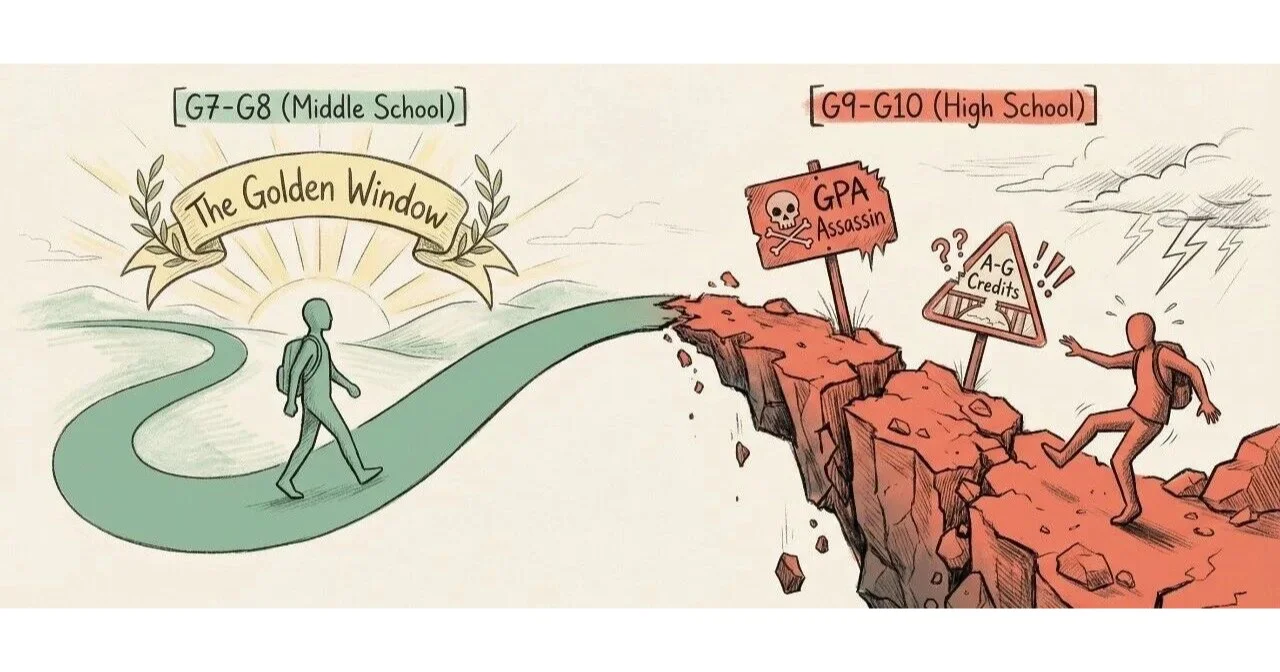
US-Born Family's Hardcore Guide to San Diego Public Schools: G7-G10 Windows and Hidden Rules
VOSD's guide is written for locals — US-born returning families need the hidden rules. Math pathway acceleration, ELL reclassification, A-G transfer pitfalls, Choice windows, Allen Bill, IEP/504, SSC, DELAC — the full operational handbook for navigating San Diego public schools.
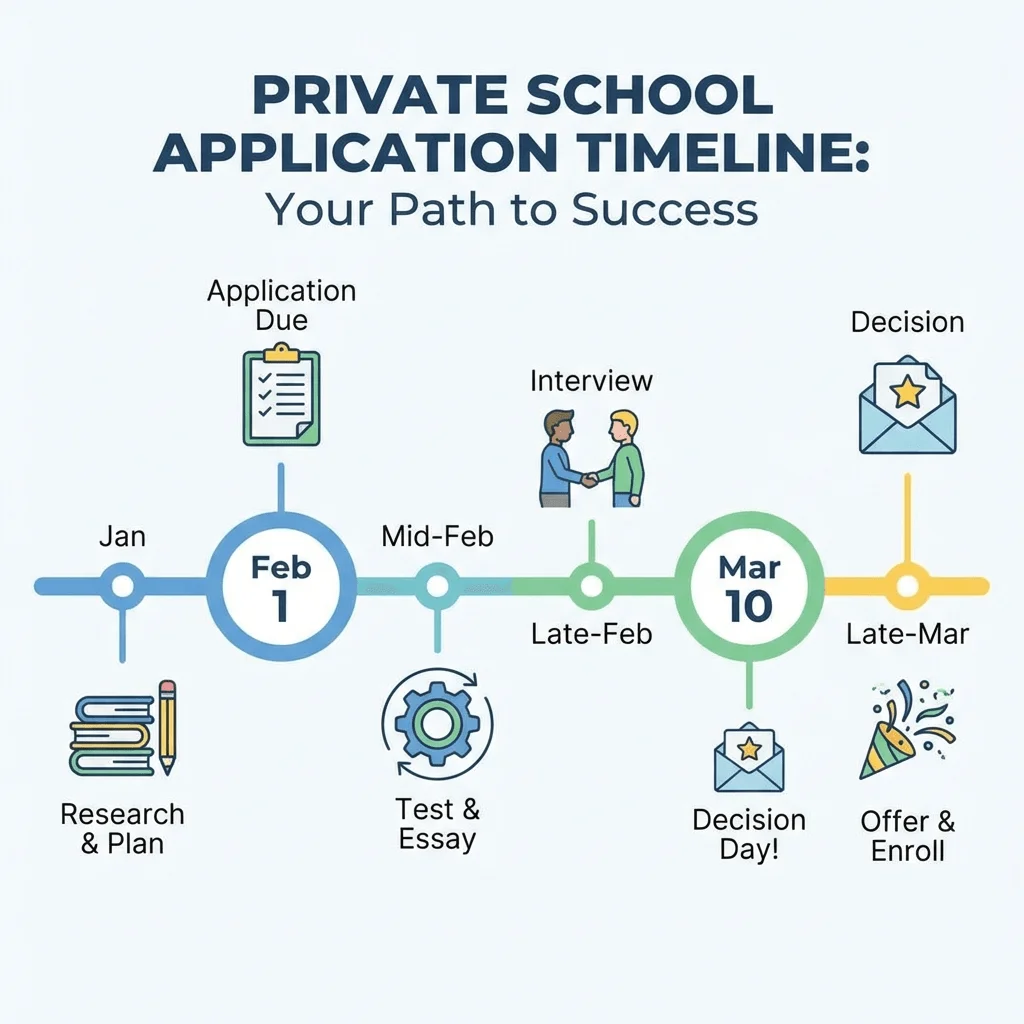
2026 School Choice Action Playbook: Timeline & Toolkit for US-Born Families
A 12-month school choice timeline, school visit questions, after-school care strategy, and the school district premium vs. private school financial model — a complete action playbook for US-born families.