San Diego Private Schools: Bishop's vs Parker vs LJCDS
Short answer: Bishop's, Francis Parker, and La Jolla Country Day School are three prominent San Diego independent-school choices, but they are not interchangeable. Start with grade span, 2026–27 tuition, campus model, testing, and the student's preferred learning environment. Then confirm the 2027–28 checklist directly with each admissions office before building a calendar.
This comparison was verified on September 4, 2026. Tuition and admissions dates can change, and a listed requirement does not predict an admission decision.
The comparison at a glance
| School | Grade span | 2026–27 published tuition | Current application signal | A useful first fit question |
|---|---|---|---|---|
| The Bishop's School | Grades 6–12 | $52,500 | 2027–28 application is open; materials due February 1, 2027 | Does the student want one middle-and-upper-school campus with an Episcopal identity? |
| Francis Parker School | Junior Kindergarten–Grade 12 | $30,300–$49,100 by division | 2027–28 application is open; Upper School materials due February 1, 2027 | Does the family value a long JK–12 path and two age-specific campuses? |
| La Jolla Country Day School (LJCDS) | Age 3–Grade 12 | $48,900 for Grades 9–12 | Applications open September 1; Upper School testing and aid materials are due February 1 | Does the student want one broad-age campus with inquiry and experiential learning? |
Tuition is the published base amount, not a complete family budget. Transportation, uniforms, technology, trips, and other optional or required expenses differ. Review the school's own fee explanation before comparing totals.
1. The Bishop's School: a focused Grades 6–12 path
The Bishop's School profile is the narrowest age-range option in this comparison. Its official tuition page lists $52,500 for Grades 6–12 in 2026–27, including mid-morning cereal and hot lunch. The same page separately lists estimated books, devices, supplies, uniforms, incidentals, and optional transportation, so $52,500 should not be treated as the all-in cost.
For the current cycle, Bishop's says it is fully enrolled for 2026–27 and that the 2027–28 application is open. The published timeline includes:
- January 1, 2027: submit the initial application to be guaranteed an interview;
- February 1, 2027: admissions and new-family financial-aid materials due; and
- March 10, 2027: decisions released.
Applicants for 2027–28 must submit ISEE or SSAT testing. For some applicants to Grades 10–12, Bishop's says PSAT, SAT, or ACT results may be used instead. Recommendations, school records, student and parent questionnaires, and an interview also appear in the official process. Confirm the grade-specific checklist in the application portal.
The fit question is broader than selectivity. Families should examine the Episcopal identity, the transition into a school beginning at Grade 6, the single La Jolla campus, the student's appetite for a busy academic and extracurricular schedule, and the daily commute.
Official verification: Applying to Bishop's and Tuition and Financial Aid.
2. Francis Parker: a JK–12 system across two campuses
Francis Parker School profile serves Junior Kindergarten through Grade 12. Its Mission Hills campus serves younger students, while the Linda Vista campus serves Middle and Upper School. That structure can appeal to families seeking a long runway, but parents should evaluate the actual transition between divisions rather than assuming a single identical experience from JK through Grade 12.
Published 2026–27 tuition ranges from $30,300 to $49,100:
- Junior Kindergarten: $30,300;
- Senior Kindergarten–Grade 5: $37,700;
- Grades 6–8: $46,200; and
- Grades 9–12: $49,100.
Parker says lunch, required learning materials, yearbooks, and selected Parents Association events are included. Uniforms, transportation, some trips, and division-specific expenses may be additional.
The 2027–28 application is open. Parker's Upper School process lists a parent statement, student statement, English and math teacher evaluations, an administrator evaluation, academic records, ISEE registration, and a classroom experience and/or interview. The published completion deadline is February 1, 2027, with decisions scheduled for March 10, 2027. Requirements vary by division, so a sibling applying to Lower School should not use the Upper School checklist.
Official verification: Parker Admissions, Upper School application steps, and 2026–27 Tuition and Affordability.
3. LJCDS: one campus from early childhood through Grade 12
La Jolla Country Day School serves children from age 3 through Grade 12 on one La Jolla campus. Our LJCDS school profile covers its program in more detail; the official admissions site describes Upper School as interdisciplinary, inquiry-oriented, and connected to learning beyond the classroom.
For 2026–27, LJCDS lists tuition by level. Grades 5–8 are $48,200 and Grades 9–12 are $48,900. The school says tuition includes lunch, textbooks, experiential-education fees, Parents Association membership, graduation and yearbook fees, and the enrollment deposit. Optional expenses and some additional fees still need separate review.
The Upper School application page says applications open September 1. ISEE or SSAT testing must be completed by February 1, and financial-assistance applications are also due February 1. Families completing the process by that date receive a decision in mid-March. The public page does not publish an official acceptance rate, so third-party percentages should not be used to predict a student's chances.
Official verification: LJCDS Admission, Upper School application steps, and 2026–27 Tuition and Financial Assistance.
How the application requirements differ
| Question | Bishop's | Parker | LJCDS |
|---|---|---|---|
| Published grade span | 6–12 | JK–12 | Age 3–12 |
| Upper-level testing | ISEE or SSAT; certain older applicants may use PSAT/SAT/ACT | Upper School checklist specifies ISEE | ISEE or SSAT by February 1 |
| Interview or visit | Applicant and parent/guardian interview | Classroom experience and/or applicant interview | Follow the grade-specific portal checklist |
| Records and recommendations | Teacher and administrator recommendations plus records | Teacher and administrator evaluations plus records | Requirements appear in the applicant's Finalsite checklist |
| Current cycle | 2027–28 open | 2027–28 open | Applications open September 1; confirm the portal cycle |
No school publishes a formula assigning fixed percentages to tests, essays, recommendations, activities, or interviews. Treat every required item seriously; do not turn an anecdote or consultant opinion into an admissions algorithm.
Financial aid changes the useful cost comparison
Sticker price is a starting point. The three schools publish need-based assistance information, but the amounts below describe different periods and should not be ranked as if they were the same metric.
- Bishop's reports more than $5.3 million in annual financial aid and ancillary expenses, with 20% of students receiving aid.
- Parker reports approximately $8.25 million in tuition assistance awarded to 25% of students.
- LJCDS reports $6.7 million in financial assistance for 2025–26.
Those figures do not tell an individual family what it will receive. Apply by the school's deadline, use the required Clarity process, and ask whether assistance covers transportation, trips, technology, or other expenses in addition to tuition.
Five questions that reveal fit better than a ranking
1. When does the student need to enter?
Bishop's begins at Grade 6. Parker and LJCDS offer earlier entry points. For a student applying in Upper School, ask how many new students typically join the target grade and whether the school is currently accepting applications there. Do not infer availability from the overall grade span.
2. What kind of campus continuity does the family want?
Parker offers a long path across two campuses. LJCDS offers a long path on one campus. Bishop's concentrates on middle and upper school. The practical issue is how the student handles transitions, peer-group continuity, and a mixed-age community—not which model sounds more prestigious.
3. Is the school's identity comfortable for the family?
Bishop's describes itself through Episcopal values. Parker is non-sectarian. LJCDS is non-sectarian. Visit classes and community events, then ask how those identities show up in assemblies, service, advisory, curriculum, and family expectations.
4. Can the commute work every day?
Map the morning route at school-day traffic time. Include athletics, rehearsals, tutoring, late buses, and sibling schedules. A program can look ideal on paper and still create an unsustainable week.
5. Which environment helps this student participate?
Ask the student where they are most likely to speak in class, seek teacher help, join an activity, and recover from a difficult week. Use the tour and interview to observe specific routines instead of relying on reputation alone.
What this comparison cannot tell you
Official pages can confirm tuition, published requirements, dates, and program structure. They cannot supply a reliable acceptance probability, guarantee college outcomes, or decide whether a child will thrive. Teacher counts, class-size figures, and college lists may also use different definitions or graduating classes, so compare the underlying source before placing numbers in one table.
This article originally formed part of our response to Voice of San Diego's 2026 parent guide. That report remains useful as a dated, school-reported snapshot, but the time-sensitive facts above now come from the schools' current official pages.
For a wider field of schools, continue with San Diego Private High Schools: Tuition, Admissions, and Fit. When the shortlist is ready, contact EdCommGlobal for education planning, school-question preparation, and application coordination; admissions decisions remain with each school.
Frequently asked questions
Which school is best: Bishop's, Parker, or LJCDS?
There is no evidence-based universal winner. Bishop's offers a Grades 6–12 Episcopal setting; Parker offers JK–12 across two campuses; LJCDS offers age 3–12 on one campus. The useful answer depends on entry grade, learning style, school identity, commute, budget, and the student's response to each campus.
How much is Upper School tuition in 2026–27?
Bishop's lists $52,500 for Grades 6–12. Parker lists $49,100 for Grades 9–12. LJCDS lists $48,900 for Grades 9–12. Compare what each amount includes and budget separately for any additional expenses.
Do all three require the same test?
No. Bishop's lists ISEE or SSAT and permits other named tests for certain older applicants. Parker's current Upper School checklist specifies ISEE. LJCDS lists ISEE or SSAT. Always use the target grade's current checklist.
Do the schools publish acceptance rates?
The official admissions pages used for this update do not publish a comparable official acceptance rate for the three schools. Aggregator estimates are not school-reported and should not be treated as a forecast for an individual applicant.
When should a family start?
Begin before applications open in early fall: choose the target grade, visit, map testing dates, identify recommenders, and prepare the financial-aid calendar. The current pages center the main checklist around February 1, but interview-guarantee and aid dates can be earlier.
Official sources checked
- The Bishop's School: Applying to Bishop's
- The Bishop's School: Tuition and Financial Aid
- Francis Parker School: Admissions
- Francis Parker School: Upper School Admissions
- Francis Parker School: Tuition and Affordability
- LJCDS: Admission
- LJCDS: Upper School application steps
- LJCDS: Tuition and Financial Assistance
Full series: VOSD Decode 2026.
Related reading
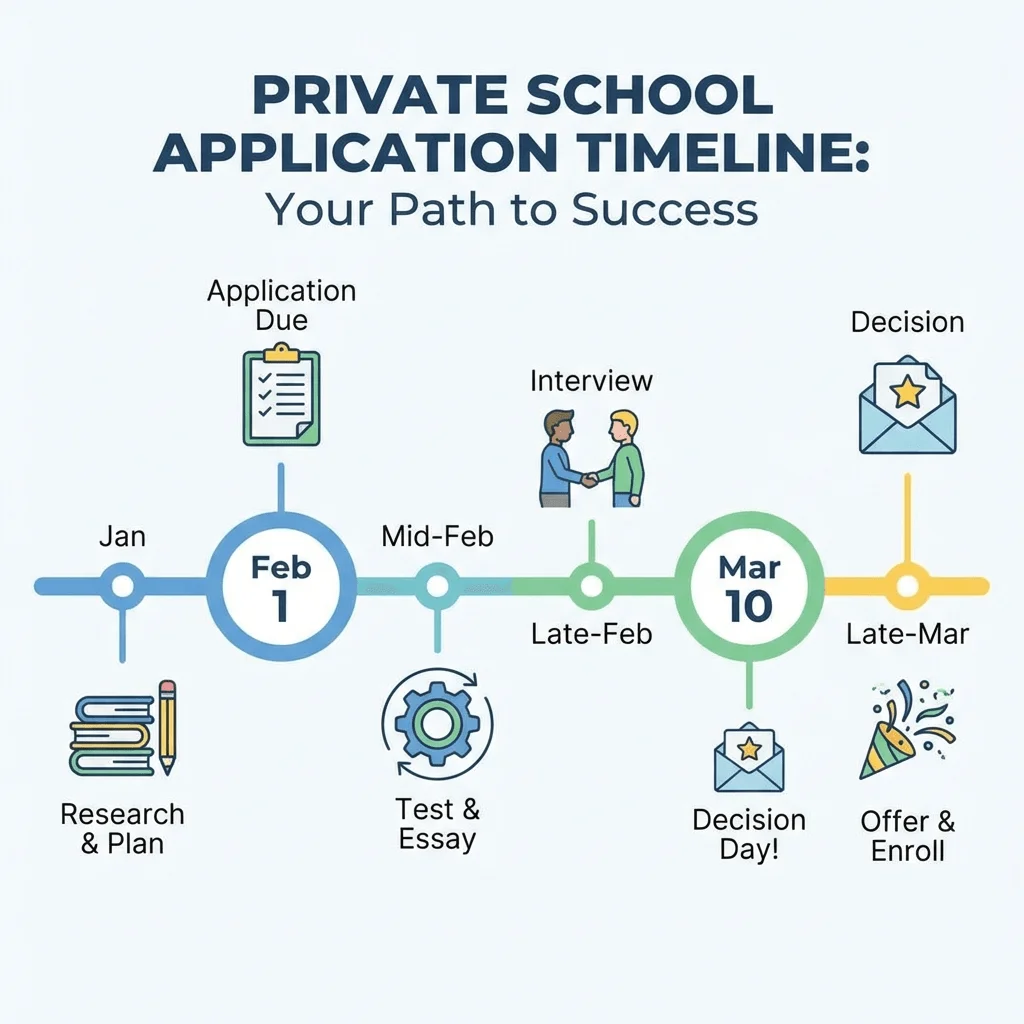
2026 School Choice Action Playbook: Timeline & Toolkit for US-Born Families
A 12-month school choice timeline, school visit questions, after-school care strategy, and the school district premium vs. private school financial model — a complete action playbook for US-born families.
US-Born Family's Hardcore Guide to San Diego Public Schools: G7-G10 Windows and Hidden Rules
VOSD's guide is written for locals — US-born returning families need the hidden rules. Math pathway acceleration, ELL reclassification, A-G transfer pitfalls, Choice windows, Allen Bill, IEP/504, SSC, DELAC — the full operational handbook for navigating San Diego public schools.
San Diego School Rankings Are Misleading: A Metric That Changes Everything
Niche A+ ratings and GreatSchools 10/10 may reflect community wealth, not school quality. VOSD's new Income vs. Test Score Metric, developed with UCSD, reveals the truth about SDUHSD's four high schools — CCA at +90.93 stands alone, while TP, SDA, and LCC all sit within the ±25 normal range.