Starting U.S. High School: What Matters Beyond the Highest GPA
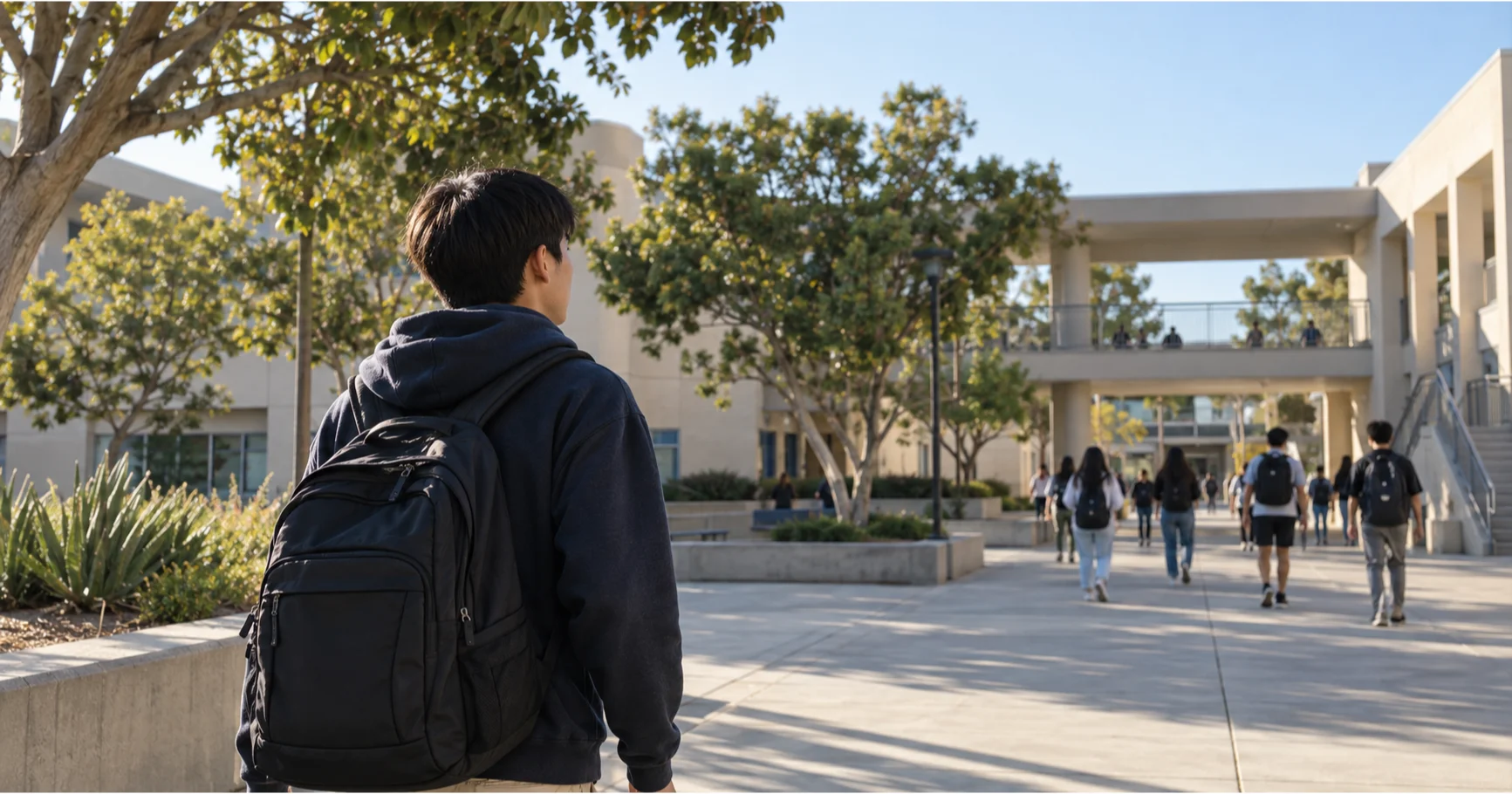
Short answer: GPA matters, but when one U.S. high school graduate looked back on four years, most of her advice concerned teachers, activities, changing friendships, time management, mental health, and one interest worth pursuing for several years. For international students, those parts of high school often determine whether the first year becomes stable.
This is EdCommGlobal. We clarify one San Diego school-planning or local-support decision at a time—and turn the next step into a practical plan.
In 2021, high school graduate Maggie O'Brien published Twenty Things I Wish I Had Known As a High School Freshman. Before graduation, she asked friends and classmates what they would tell their ninth-grade selves.

“I wish I could go back in time and tell my freshman self these 20 things.” (Twenty20 @5byseven)
She collected 20 suggestions. This is one student's reflection, not a standard for every teenager. Still, relatively few items concern grades. Most are about people, activities, time, and growing up.
Together, the 20 suggestions point to five themes.
1. Meet people—and learn to ask for help
The first item encourages students to greet people in the hallway, especially teachers. O'Brien also recommends using office hours, getting to know upperclassmen, and accepting that friend groups change.
The common lesson is that students often have to move toward the resources around them. A teacher may not know that a quiet student is lost, and an upperclassman's knowledge about courses, clubs, and campus routines will not automatically reach a new student.
Schools organize help differently. The time may be called Office Hours, Tutorial, Flex Time, or Academic Support. A new student should at least know where to find it, how to make an appointment, and who the counselor or advisor is.
International students do not need to wait for perfect English. Bringing one specific question to a teacher is more useful than remaining silent for several weeks.
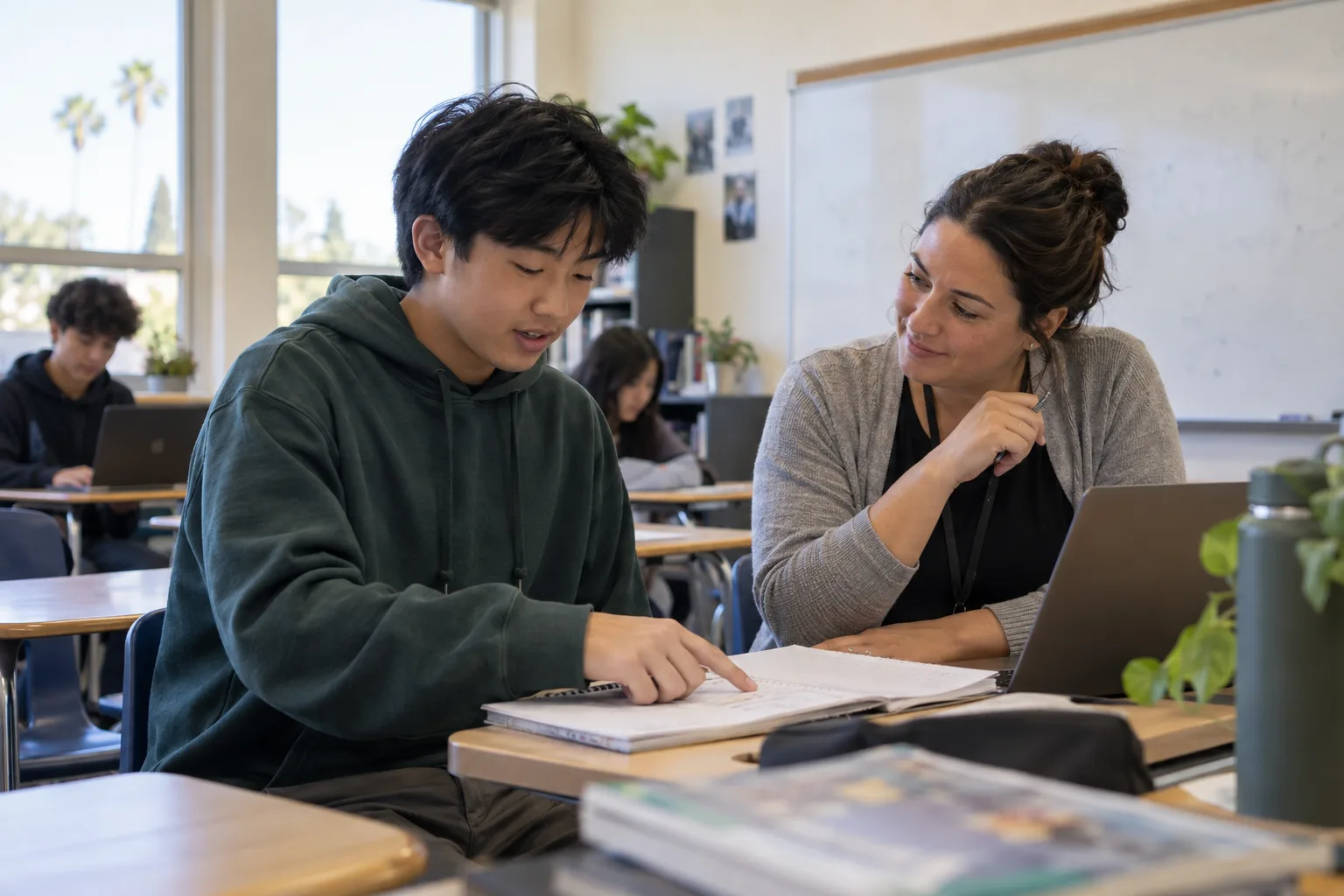
A specific question is more useful than waiting for perfect English. This is an illustrative image and does not depict a particular school or person.
2. Join campus life—and allow friendships to change
The original article repeatedly encourages students to try clubs, sports, dances, games, and school events. It also says that changing friend groups are normal.
For a student who has just transferred into a U.S. school, an activity first provides a regular place to belong. Practicing, rehearsing, or working on a project together is usually easier than trying to enter an unfamiliar group at lunch.
O'Brien also recommends taking photos, attending games, and participating in school spirit. Students do not have to enjoy every event, but moving only between class and home leaves out a large part of high school life.
There is no need to fill the schedule immediately. Trying one or two activities and keeping one for the semester is enough.
3. Find one interest and give it several years
O'Brien joined her school's Student Ambassador program. She began by helping with student visits, gradually accepted more responsibility, and later led the ambassador group.
The path is more concrete than the word “leadership”: join, keep showing up, do the work, and accept responsibility over time. Depth in an activity usually develops this way.
She entered high school considering biology and medicine but later moved toward data science after discovering that she enjoyed mathematics. It is normal for a fourteen- or fifteen-year-old not to know a future major. High school should leave room for interests to change.
Rather than deciding a major for a new student, families can watch whether the student continues without reminders and still wants to return after the work becomes difficult.
4. Manage ordinary tasks—and leave room to breathe
Several of the 20 suggestions are deliberately ordinary: organize Google Drive and email, put away the phone, learn consistently instead of cramming for finals, participate in school, and avoid spreading yourself too thin.
Those details can shape an international student's first semester. School information may be distributed across verbal instructions, email, Canvas or Google Classroom, course websites, and paper handouts. Missing one channel can mean missing an assignment.
A simple routine is enough: check email and learning platforms at a fixed time each day, then review the next week's tests, projects, and deadlines once a week. When a problem appears, decide what the student can do and who can help.
The original list also treats mental health as a priority. Students can speak with a teacher or counselor when they need an extension or additional support. Participating in school does not require filling every afternoon.
5. Grades matter, but high school includes more than grades
The original article does not dismiss grades. It reminds students that high school lasts only four years and that they should also live through it.
International students and their families can easily lose sight of that point while worrying about English, GPA, and college admission. High school also includes friends, teachers, activities, the first problems handled independently, and the gradual discovery of what the student enjoys.
The article ends with a brief line: “High school flies by.”
Students do not need to join every activity or adjust completely in the first month.
Five things to do during the first month
- Find the school email, learning platform, and grade portal.
- Learn when and how each teacher offers help.
- Bring at least one specific question to a teacher.
- Try one or two clubs or campus activities.
- Once a week, review deadlines, unfinished work, and questions that require help.
Parents can also replace one question about a score with a question about action: “Who can help with this problem, and what will you do next?”
GPA still requires careful attention. If the course level is clearly inappropriate, assignments remain incomplete, or emotional health is affecting daily life, the family should contact the school and appropriate professionals promptly. During ordinary adjustment, families can also watch whether the student is beginning to find resources, build relationships, and handle difficulties independently.
That is a useful sign that the student is taking ownership of high school life.
If your child is preparing to enter a U.S. middle or high school, or is already enrolled and struggling with courses, academic routines, or campus adjustment, contact EdCommGlobal. We can begin with the student's current school, grade, and next decision.
Frequently Asked Questions
Does GPA matter during the first semester of U.S. high school?
Yes. Beginning in ninth grade, high school courses and grades become part of the academic record. Families should pay attention to scores while also building the task-management, teacher-communication, and help-seeking habits that support them.
Do all U.S. high schools offer office hours?
Not under the same name. Schools may use Office Hours, Tutorial, Flex Time, or Academic Support. Some teachers help before school, during lunch, or after class. Students should check the syllabus and school website or ask the teacher directly.
How many clubs should a new student join?
There is no universal number. A student can try one or two activities and keep one for the semester. After the academic routine becomes stable, the student can decide whether to add more.
Source and image note
- Maggie O'Brien, Twenty Things I Wish I Had Known As a High School Freshman, Grown and Flown, 2021. This article uses the personal reflection as a starting point, not as research evidence or a standard for every student.
- The graduation image and caption come from the source article, where the image is credited to Twenty20 @5byseven. EdCommGlobal created the remaining images as illustrative scenes; they do not depict a particular school or person.
Related reading
Related reading

How to Keep Your Child's Chinese Strong After Moving Back to the US
How to maintain your child's Chinese language skills after returning to the US for school.
San Diego Living Guide for Chinese Families: Safety, Community, and Daily Life
A practical guide to living in San Diego for Chinese families with school-age children.
Your Child's First Semester in America: What to Expect and How to Prepare
A month-by-month guide for US-born children transitioning from Chinese schools to American high schools.